A Comprehensive Guide to Fidya Donation
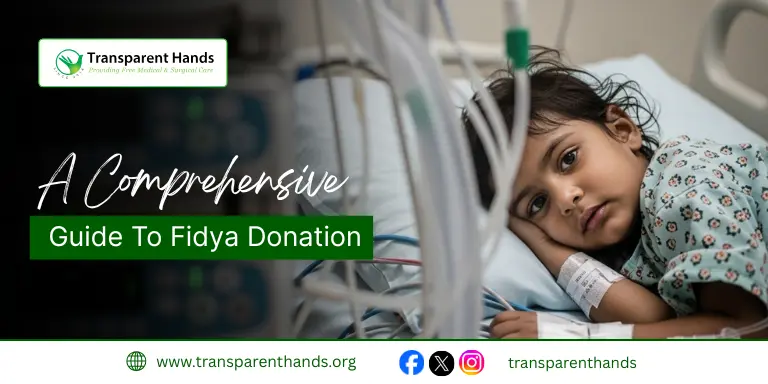
Fasting is one of the most important obligations. It is considered to be the fourth pillar of Islam and an important duty. Muslims fast throughout the month of Ramadan, during which they refrain from eating and drinking from dawn (fajr) till the time dusk starts to fall (maghrib). An overwhelming majority of Muslims fast during Ramadan. However, there are many Muslims who aren’t able to fast due to medical conditions. In such cases, Islam reserves the allowance of Fidya, an amount that must be paid for missing the required number of fasts during Ramadan. In this article, we will discuss the rules for Fidya and the conditions under which Fidya applies.
What is Fidya?
Fasting during Ramadan is mandatory for all Muslims. The Qur’an tells us that:
“O you who have believed, decreed upon you is fasting as it was decreed upon those before you that you may become righteous” (Surat Al-Baqarah, 2:183)
Fidya is an amount that must be paid for missed fasts during Ramadan. Allah (SWT), in His wisdom, has provided alternatives for those who aren’t medically fit to observe the required fasts during Ramadan.
As hours turn into days, and days into months and years, our stay in this life becomes briefer. While we are alive, we have the opportunity to repent for our sins and transgressions. A long life is an opportunity for greater deeds, according to this hadith:
“Abdur-Rahman bin Abi-Bakrah narrated from his father that a man said: “O Messenger of Allah! Which of the people is the best?” He said: “He whose life is long and his deeds are good.” He said: “Then which of the people is the worst?” He said: “He whose life is long and his deeds are bad.” (Jami` at-Tirmidhi, 2330)
However, as we age, we might develop medical conditions that could restrict us from fasting during Ramadan. Allah (SWT) is kind and forgiving. He doesn’t burden us beyond our capacity:
“Allah does not charge a soul except [with that within] its capacity.” (Surah Al-Baqarah, 2:286)
Fidya allows us to remain connected to Ramadan and continue reaping the spiritual rewards of fasting. However, remember that fidya applies only to specific conditions, such as chronic illnesses, injuries, or situations where fasting may compromise someone’s health or life.
Rules for Fidya
The rules for Fidya are derived from the following Qur’anic verses:
“[Fasting for] a limited number of days. So whoever among you is ill or on a journey [during them] – then an equal number of days [are to be made up]. And upon those who are able [to fast, but with hardship] – a ransom [as substitute] of feeding a poor person [each day]. And whoever volunteers excess – it is better for him. But to fast is best for you, if you only knew.” (Surat Al-Baqarah, 2:184).
These verses clearly establish the significance of fasting and encourage Muslims to fast, unless it is impossible for them to do so. Hence, Fidya only applies to the following categories:
- People with chronic illnesses.
- People with critical injuries who are unsure about their recovery.
- Elderly having no physical strength to fast.
Remember that Fidya applies only to specific conditions. It doesn’t apply to the following situations:
Temporary illness. People with a temporary illness can make up for missed fasts after Ramadan.
People who deliberately break fasts–this is a case for Kaffarah, not Fidya.
Pregnant & breastfeeding Women may skip fasting if it endangers their lives, but must make up for the missed fasts once they recover strength.
What is the Fidya Amount for 2026
Fidya is equivalent to feeding a deserving person twice a day, or two individuals once a day. Since sometimes be difficult to find a deserving person, you can always donate an equal amount to a charity. If you opt to feed the person yourself, remember that the food should be ample. By the same token, if you opt to make a Fidya donation, the amount must be sufficient.
Here are some estimates that can help you give the Fidya amount:
| Currency | Amount For a Single Missed Fast | Total for Ramadan (30 Days) |
| PKR (Pakistan) | 500 | 15,000 |
| USD (United States) | $6 | $180 |
| GBP (United Kingdom) | £5 | £150 |
Remember that these recommended amounts may vary based on local food prices. Therefore, it is always advisable to be generous with your Fidya donations.
Eligibility for Receiving Fidya
The eligibility criteria for receiving Fidya are identical to those for Zakat. If you are arranging food for someone, ensure they are deserving individuals who lack the financial means to arrange their own Suhoor and Iftar meals. Always opt for people who are practicing Muslims, truly deserving of your support. You can give your Fidya to the following category of Muslims:
- The Poor (Al-Fuqara)
- The Needy (Al-Masakeen)
- Organizations or people that collect Zakat
- New Muslims or people who want to convert (Mu’allafah Quloobuhum) …
- Freeing Slaves (Riqab) …
- People in Debt (Al-Gharimeen) …
- For the Cause of Allah (Fi Sabilillah) …
- Travelers (Ibn Al-Sabeel)
Difference Between Fidya & Kaffarah
It is important to understand that Fidya only applies to situations where someone cannot fast due to valid reasons. However, if a person breaks the fast intentionally, Kaffarah apply. Remember that breaking a fast without any valid reason is a sin; kaffarah atones for the sins. If someone committed Kaffarah, they must sincerely repent and make atonement. In this case, they must make up for the missed fast as Qadda, and do commit to either of the following:
- Fast consecutively for 60 days without a break or
- Feed 60 eligible people twice a day.
The monetary equivalent of feeding 60 people is approximately equal to PKR 30,000 for a single invalidated fast.
Selecting a Charity For Donating Fidya or Kaffarah
There are many organizations that support worthy causes and are deserving of your Fidya and Kaffarah donations. However, you may like to consider the following factor before committing to your donations.
- Shariah Compliance: You cannot give Fidya donations to any charity. Remember that the organization you intend to donate to should be Shariah-compliant. Before donating, check its status.
- Social Media Presence: Ensure that the organization you support has a social media presence, so that you get confidence in their operations and work.
- Always make sure that the organization is transparent and accountable.
- Support causes that not only uplift individuals but also the entire community.
FAQs
Can Fidya be donated through online charity platforms? Yes, Fidya can be donated securely through trusted online charity platforms.
How can I ensure my Fidya reaches deserving beneficiaries? Donate through reputable and Shariah-compliant charities that practice transparency.
Is Fidya accepted if given to relatives? Yes, it may be given to poor relatives who are not your dependents.
Can Fidya be used for medical or healthcare support? Yes, Fidya can be used to support essential medical and healthcare needs.
What is the reward for paying Fidya sincerely?Fidya is a compensation for missing fasts. Sincere Fidya earns Allah’s (SWT) pleasure and spiritual reward
Are Fidya rates different in different countries? Yes, Fidya rates may vary depending on local food costs.
How do trusted charities manage and distribute Fidya funds? They ensure proper collection, verification, and fair distribution to eligible beneficiaries according to the Shariah laws.
Make a Difference With Your Fidya Donation
Charity is driven by a deep desire to make a meaningful difference. Your Fidya donation can leave a lasting impact on the lives of needy patients in Pakistan who lack access to proper healthcare. While one-time assistance is a commendable act, helping someone regain full health is a powerful intervention that leaves an indelible mark on a person’s life and strengthens their entire family and community.
Transparent Hands has provided assistance to thousands of people since its inception in 2014. Our maternal and child program has assisted many young women and their families. We also provide a number of free surgeries and medical procedures, including ENT, neurosurgical, gynecological/obstetric, orthopedic, urologic, pediatric, general, and many more.
We are also renowned for arranging medical camps in low-income areas. These camps provide free medical checkups, diagnostics, and medicines, while we also arrange medical awareness camps for the participants.
Transparent Hands is a Shariah-compliant organization, and our donations and operations are conducted under the supervision of a qualified Islamic scholar. We also have a strong online presence and you can check out our online forums to assess our work. Transparency and accountability has always been our priority. That’s why we maintain the trust of our donors and supporters. Make your Fidya donation for Transparent Hands now!





Leave Your Comments