Benefits of Donating Qurbani to the Poor
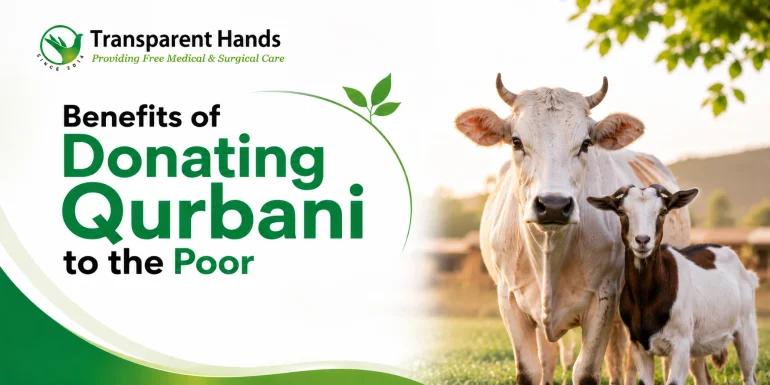
Pakistan ranks 106th out of 123 countries in the 2025 Global Hunger Index, with a hunger score classified as serious. For tens of millions of families living below the poverty line, a meal that includes meat is a luxury they rarely experience. Eid al-Adha, however, is one day in the year when the act of Qurbani can change that reality. When believers donate Qurbani to the poor, the benefits stretch far beyond a single meal.
This blog looks at the spiritual rewards, the social impact, and the practical reasons why directing your Qurbani sacrifice toward those who genuinely need it is one of the most meaningful acts a Muslim can perform on the days of Eid.
The Spiritual Reward of Giving to the Needy
The Quran makes clear that Allah (SWT) does not evaluate Qurbani by the size of the animal or the amount spent. What reaches Him is the sincerity of the believer:
“Their meat will not reach Allah, nor will their blood, but what reaches Him is piety from you. Thus have We subjected them to you that you may glorify Allah for that to which He has guided you; and give good tidings to the doers of good.” (Surat Al-Haj, 22:37)
This verse sets a powerful standard. Piety, in the context of Qurbani, is expressed through the act of sharing. A believer who slaughters an animal and distributes all of its meat to families who struggle every day is expressing a form of piety that goes beyond mere ritual compliance.
The Prophet (ﷺ) described the exceptional reward of Qurbani performed on the day of Eid:
“The son of Adam does not do any deed on the Day of Sacrifice that is dearer to Allah than shedding blood. It will come on the Day of Resurrection with its horns and cloven hoofs and hair. Its blood is accepted by Allah before it reaches the ground. So be content when you do it.” (Sunan Ibn Majah, 3126)
When this already beloved act is combined with the intention of feeding those who are hungry, the spiritual weight of the sacrifice increases further.
Feeding Hunger Through Qurbani
The families who benefit most from Qurbani donations are not always visible. They live in slums without addresses, in nursing homes without visitors, in rural districts far from city markets. A widow raising children on daily wages has no way to purchase fresh meat. An orphan in a government facility may never have tasted beef or mutton outside of Eid.
The Quran connects the act of sacrifice directly to feeding these people:
“And the camels and cattle We have appointed for you as among the symbols of Allah; for you therein is good. So mention the name of Allah upon them when lined up for sacrifice; and when they are lifeless on their sides, then eat from them and feed the needy and the beggar. Thus have We subjected them to you that you may be grateful.” (Surat Al-Haj, 22:36)
The instruction is specific. Feed the needy and the beggar. Not just relatives and neighbors, but those who have nothing. Donating your Qurbani to a trustworthy charity ensures the sacrifice reaches exactly these families.
The Social Benefit: Building Equality on Eid
Eid al-Adha is described in Islamic tradition as a day of joy and celebration for all Muslims. Yet for millions of Pakistani families, the celebration remains out of reach. Children who see others enjoying a feast while their own table is empty experience Eid as a reminder of their poverty rather than a day of shared joy.
Qurbani donations disrupt this inequality. When meat reaches a family that has been surviving on bread and lentils, Eid becomes a real celebration for them too. This is the social function of Qurbani, and the Prophet (ﷺ) articulated it in the language of unity:
“Nu’man b. Bashir reported that Muslims are like one body of a person; if the eye is sore, the whole body aches, and if the head aches, the whole body aches.” (Sahih Muslim, 2586d)
A community in which some celebrate lavishly while others go without is not living up to this standard. Qurbani donation to the poor is one of the most direct corrections for this imbalance.
The Nutritional Benefit That Lasts
Fresh meat from Qurbani provides protein, iron, zinc, and essential vitamins that many low-income families simply cannot access in their daily diets. For children, especially, a meal rich in protein during a period of food insecurity can have measurable health benefits.
Charities that manage Qurbani professionally ensure the meat is processed hygienically, packaged safely, and delivered fresh. This means the nutritional benefit of the sacrifice is preserved all the way to the family’s table.
The Sunnah of Full Distribution to the Poor
The Prophet (ﷺ) did not merely recommend sharing Qurbani with the poor. On occasion, he commanded that the entire sacrifice be given to them:
“‘Ali bin Abu Talib narrated that the Messenger of Allah (ﷺ) commanded him to distribute the entire sacrificial camel – its meat, skin and covers – among the poor.” [(Sunan Ibn Majah, 3157)
This Hadith is a reminder that the Sunnah encourages generosity without limit. A believer who donates their full Qurbani to the poor is not only fulfilling a religious obligation. They are following the practice of the Prophet (ﷺ) himself.
Donate Your Qurbani to Transparent Hands This Eid al-Adha
Transparent Hands is one of Pakistan’s largest and most renowned online crowdfunding platforms for healthcare. Since 2014, thousands of deserving patients across Pakistan have received the treatment they needed.
Our Maternal and Child program has reached thousands of women and children, saving many young lives. We also fund free surgeries, including cardiac, orthopedic, pediatric, neurosurgery, ENT, urology, general surgery, and gynecological and obstetric procedures. We also arrange free medical camps that provide services of qualified doctors and paramedics to deliver free medical checkups, medicines, and diagnostic tests. Thousands of patients benefit from these camps every year in the most low-income regions of Pakistan.
Transparent Hands also runs an efficient, Shariah-compliant Qurbani program. We carry out every Qurbani with full dedication and care. Last year, we reached widows, orphans, transgender communities, families in slums, laborers, madrassa students, and elderly residents of nursing homes. This year, with your support, we can reach many more individuals and families. Let’s make this Eid special by leaving a mark on someone’s life. Make your Qurbani donation now!
FAQs
Is donating all Qurbani meat to the poor permissible in Islam?
Yes. While the traditional practice divides the meat into three portions, giving all three portions to the poor is fully permitted and is in line with the Sunnah of distributing the entire sacrifice to those in need.
Does donating Qurbani to the poor increase the spiritual reward?
Giving Qurbani with the sincere intention of feeding those who are hungry reflects a higher degree of piety. The Quran explicitly instructs believers to feed the needy and the beggar from the sacrificial meat, which suggests that this intention carries great spiritual weight.
Which families benefit most from Qurbani donations?
The most deserving beneficiaries include widows, orphans, families below the poverty line, elderly residents of nursing homes, people with disabilities, laborers with low incomes, and residents of rural and underserved areas.
Can I specify who receives my Qurbani meat?
Many charities allow donors to specify a region or community. If you want your Qurbani to reach a particular group, such as orphans or families in flood-affected areas, ask your chosen charity whether that option is available.
How does Qurbani donation differ from Sadaqah?
Qurbani is a specific act of worship performed during Eid al-Adha that involves the ritual sacrifice of an animal. Sadaqah is a broader term for voluntary charity given at any time. Both carry spiritual reward, but Qurbani has specific conditions of eligibility, timing, and method that must be met.


Leave Your Comments