Important Lessons From Hajj & Qurbani For Muslims
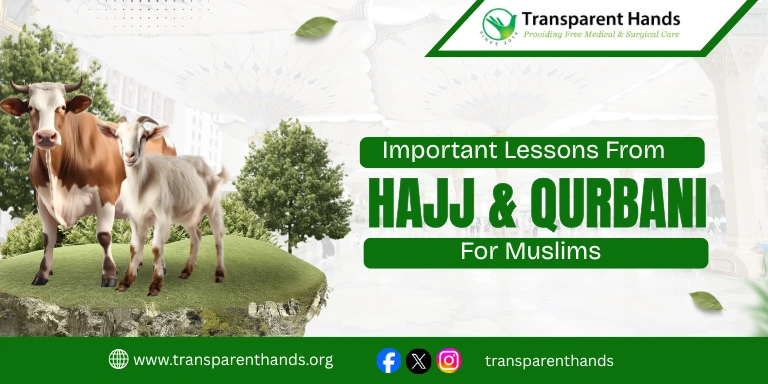
Dhul Hijjah is one of the most sacred months in the Islamic calendar. It is a month of pilgrimage and sacrifice for Muslims. While Hajj is the fifth pillar of Islam, Qurbani also holds great significance in Islam and is considered an obligatory ritual by millions of Muslims. While the Hajj promises complete redemption, Qurbani also offers many spiritual rewards. However, both rituals have profound meaning and offer important lessons for believers. They are driven by the urge to get closer to Allah (SWT) and adhere to Shariah and its spiritual demands.
Significance of Hajj
Hajj is the Islamic pilgrimage to the Ka’aba in Mecca. It is a mandatory journey for all Muslims who have the physical and financial capacity to undertake it. The following Quranic verse declares that Hajj is mandatory:
“In it are clear signs [such as] the standing place of Abraham. And whoever enters it shall be safe. And [due] to Allah from the people is a pilgrimage to the House – for whoever is able to find thereto a way. But whoever disbelieves – then indeed, Allah is free from need of the worlds.” (Surat ‘Āli `Imrān, 3:97)
The Hajj takes place annually during Dhul-Hijjah and millions of Muslims from all around the world gather to perform this important duty. Hajj contains several sacred rituals that hold profound spiritual significance. Hajj can potentially erase all the previous sins, according to the following Hadith:
“Narrated Abu Huraira: The Prophet (p.b.u.h) said, “Whoever performs Hajj for Allah’s pleasure and does not have sexual relations with his wife, and does not do evil or sins then he will return (after Hajj free from all sins) as if he were born anew.”” (Sahih al-Bukhari, 1521)
Hajj is performed during the 8th to 12th of Dhul Hujjah and is soon followed by Eid al-Adha, which is the day Muslims perform animal sacrifice to commemorate the faith and steadfastness of Hazrat Ibrahim (AS) and Hazrat Ismael (AS).
Lessons from Hajj
One of the greatest lessons of Hajj is unity and discipline. During this time, millions of Muslims hailing from different nationalities, races, and social classes get together wearing simple white ihrams to worship Allah (SWT). It is a practical demonstration of the unity expected from the believers. The Quran tells us:
“And hold firmly to the rope of Allah all together and do not become divided. And remember the favor of Allah upon you – when you were enemies and He brought your hearts together and you became, by His favor, brothers. And you were on the edge of a pit of the Fire, and He saved you from it. Thus does Allah make clear to you His verses that you may be guided.” (Surat ‘Āli `Imrān, 3:103).
Hajj also signifies a spiritual awakening and a journey towards Allah (SWT). For believers, this world and its matters are temporary, and success in the afterlife is all that matters. Hajj brings believers closer to Allah (SWT) and offers redemption. That’s why the Prophet (ﷺ) told Muslims to perform Hajj as soon as they can, in the following Hadith:
The Messenger of Allah (ﷺ) said: “Whoever intends to perform Hajj, let him hasten to do so, for he may fall sick, lose his mount, or be faced with some need.” (Sunan Ibn Majah, 2883)
There is another Hadith that shows that pilgrims performing Hajj achieve closeness to Allah (SWT), and are a delegation to Allah (SWT):
“It was narrated from Abu Hurairah that the Messenger of Allah (ﷺ) said: “The pilgrims performing Hajj and ‘Umrah are a delegation to Allah. If they call upon Him, He will answer them; and if they ask for His forgiveness, He will forgive them.” (Sunan Ibn Majah, 2892)
Lessons From Qurbani
According to the Hanafi school of jurisprudence, Qurbani is obligatory on all adult Muslims who possess Nisab value of wealth, or more. Other Islamic schools of thought also highly encourage Qurbani, due to the following Quranic verse:
So pray to your Lord and sacrifice [to Him alone]. (Surat Al-Kawthar, 108:2)
The following Hadith further establishes the significance of Qurbani:
“It was narrated from Abu Hurairah that the Messenger of Allah (ﷺ) said: “Whoever can afford it, but does not offer a sacrifice, let him not come near our prayer place.” (Sunan Ibn Majah, 3123)
The greatest lesson from Qurbani is sacrifice. The ritual commemorates the great sacrifice of Hazrat Ibrahim (AS) and Hazrat Ismael (AS).
Traditionally, the sacrificial meat is divided into three equal portions: one for self-consumption, another for neighbors and relatives, and another for the underprivileged. However, it is permissible to donate all three portions of meat to those in need. This reflects the true spirit of giving in Islam. The Quran clearly tells us:
“Never will you attain the good [reward] until you spend [in the way of Allah] from that which you love. And whatever you spend – indeed, Allah is Knowing of it.” (Surat ‘Āli `Imrān, 3:92).
Donate Your Qurbani to Transparent Hands
Hajj and Qurbani are both great events that offer great spiritual meaning and many spiritual rewards to Muslims. If you want the maximum spiritual rewards from your Qurbani, consider donating it to a transparent, Sharia-compliant organization like Transparent Hands.
We are one of Pakistan’s most renowned crowdfunding forums. Since our inception in 2014, we have benefited thousands of underprivileged patients. Our Maternal and Child program has helped save many young lives, while we also support a wide range of surgeries for financially struggling individuals. We also arrange regular medical camps in low-income areas to bring free medical checkups, medicines, and diagnostics close to their homes.
We have a very efficient Qurbani program that is gaining traction every year thanks to the dedication of our team and your support. We make sure that all processes in our Qurbani program align with the Shariah rules. Right from selecting the healthiest animals to performing Qurbani in the best available slaughterhouses, we make sure that your Qurbani is conducted in the best possible way.
We also make sure that the sacrificial meat packages are distributed among the most deserving people. Last year, we distributed Qurbani meat packages among families living in slums, orphans, widows, laborers, elderly people living in nursing homes, people with disabilities, madrassa students, and the transgender community. Let’s reach out to a greater number of people this year. Make your Qurbani donation now!
FAQs
How does Hajj promote unity among Muslims worldwide?
During Hajj, people from all ethnicities, nationalities, racial backgrounds, and social classes get together to please Allah (SWT). All participants wear the same clothes and practice similar rituals to exhibit faith and unity.
What are the key lessons from Qurbani for Muslims?
Qurbani teaches Muslims to accept the will of Allah (SWT) and follow Shariah, which is the Word of Allah (SWT), while sacrificing their own ego and desires.
How are Hajj and Qurbani connected in Islam?
Hajj is the fifth pillar of Islam, and Qurbani is a highly encouraged ritual that is almost as important as Hajj. According to the Hanafi school of Jurispudence, it is considered obligatory.
How does Qurbani reflect the spirit of sacrifice and giving in Islam?
By distributing Qurbani meat among underprivildged people, we can live the true spirit of Qurbani that is based on the idea of sacrifice and sharing.
What is the relationship between Nisab and Qurbani obligation?
If a Muslim possesses the Nisab value of wealth, they must give Qurbani according to the Hanafi school of thought.
How does Hajj bring Muslims closer to Allah (SWT)?
Hajj is an enormous spiritual experience that allows the believers to temporarily detach from worldly matters and concentrate on pleasing Allah (SWT).





Leave Your Comments