Purpose, Amount, and the Correct Time to Pay Zakat al Fitr
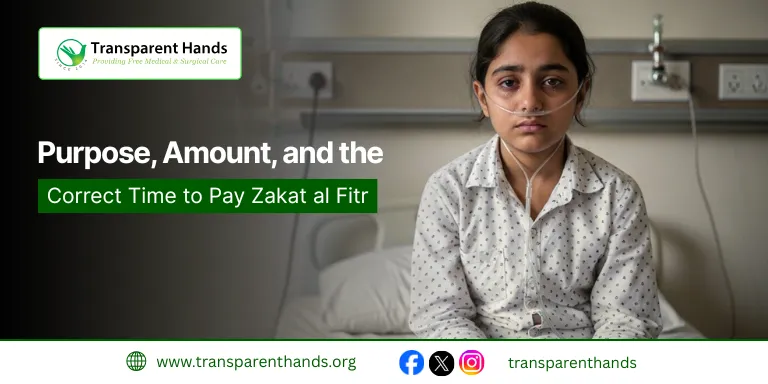
Zakat al-Fitr, also known as Fitrana, is an amount that Muslims must give before the start of Eid al-Fitr prayers. Zakat al-Fitr is an obligatory payment for the entire household. It spiritually purifies the fasting efforts of believers made during Ramadan while helping the poor prepare for Eid al-Fitr. It can be paid during the last Ashra, but must be paid before the start of the Eid al-Fitr prayers. The minimum amount of Zakat al-Fitr is equal to one Sa’ (approximately 4 KGs) of wheat; however, those with greater means are encouraged to choose higher-value commodities, so that the maximum number of needy individuals can benefit from their Fitrana charity.
In this article, we will discuss the concept of Zakat al-Fitr, its mandatory status, recommended amount, and where to donate it to maximize its impact.
The Purpose & Benefits of Fasting
Ramadan is considered to be the most sacred month for Muslims. It is the month of fasting and heightened piety. Muslims fast from the beginning of dawn (fajr) till the start of dusk (maghrib), refraining from eating, drinking, and physical intimacy. Fasting in Ramadan provides a perfect template for Muslims to follow throughout the year. It teaches discipline and helps believers focus on and reflect on life’s real purpose. It also promises great rewards in the afterlife, according to the following hadith:
That Prophet (ﷺ) said: “In Paradise there is a gate called Ar’Rayyan, it will be said on the Day of Resurrection: “Where are those who used to fast? Would you like to enter through Ar-Rayyan?” whoever enters through it will never thirst again. Then when they have entered it will be closed behind them, and no one but they will enter through it.”
(Sunan an-Nasa’i, 2237)
How Zakat al-Fitr Ensures Piety
Accountability is a central tenet of the Islamic faith; we are responsible for our actions and will be held accountable on the Day of Judgment. The Qur’an clearly states that:
“O you who have believed, fear Allah . And let every soul look to what it has put forth for tomorrow – and fear Allah . Indeed, Allah is Acquainted with what you do.” (Surat Al-Ĥashr, 59:18)
Practising Taqwa
Taqwa, or being cognizant of Allah’s (SWT) presence at all times, helps us avoid sins. Human beings make mistakes. The Qur’an states: “And Allah wants to lighten for you [your difficulties]; and mankind was created weak. (Surat An-Nisā’, 4:28)
We must make a conscious effort to spend most of our time in contemplation, prayer, and connection with Allah (SWT) during Ramadan, so that these practices become second nature to us, even after the sacred month ends.
However, we should make repentance a common practice and recognize our natural tendency towards making digressions.
Fitrana Purifies Fasting
Anas narrated that the Prophet (ﷺ) said: “Every son of Adam sins, and the best of the sinners are the repentant.” (Jami` at-Tirmidhi, 2499)
Despite our best intentions, we may still make mistakes during fasting. Fitrana has the power to purify those transgressions. It relieves us of the burdens and impurities we may have inadvertently incurred during Ramadan.
“Ibn ’Abbas (RAA) narrated, ‘The Messenger of Allah (ﷺ) enjoined Zakat-ul-fitr on the one who fasts (i.e. fasted during the month of Ramadan) to purify him from any indecent act or speech and for the purpose of providing food for the needy. It is accepted as Zakah for the person who pays it before the Eid prayer and it is Sadaqah (i.e. voluntary charity) for the person who pays it after the Eid prayer.’ Related by Abu Dawud and Ibn Majah and Al-Hakim graded it as Sahih.” (Bulugh al-Maram)
Fitrana Ensures Gratitude
Fitrana also serves as an expression of gratitude to Allah (SWT) for giving us the strength and faith to fast during the blessed month of Ramadan. It also helps in making Eid al-Fitr a more inclusive event. Many families around us lack the means to enjoy the Eid al-Fitr festivities due to financial constraints. By giving Zakat al-Fitr, we also promote inclusivity and harmony.
How Much Fitrana Should You Pay?
The Fitrana calculation may vary based on the commodity you choose. However, the principles for making the Zakat al-Fitr calculations are based on the following Hadith:
“Narrated Ibn `Umar: Allah’s Messenger (ﷺ) enjoined the payment of one Sa’ of dates or one Sa’ of barley as Zakat-ul-Fitr on every Muslim slave or free, male or female, young or old, and he ordered that it be paid before the people went out to offer the `Id prayer. (One Sa’ = 4 Kilograms approx.)” (Sahih al-Bukhari, 1503)
One Sa’ is approximately equal to 2.5 to 4 kilograms; it is safe to assume the higher quantity, as Allah (SWT) loves those who show generosity.
Technically, Sa’ is equal to four times the amount of a commodity that a person can hold by joining two hands together. The minimum amount is one Sa’, traditionally measured by volume. In practice, scholars often provide weight equivalents depending on the commodity.
Choosing Commodities For Zakat al-Fitr
Commodity prices may vary. For instance, one Sa’ of wheat may be much cheaper than one Sa’ of raisins, depending on where you live. By the same token, different qualities of raisins may be available in the market, so prices may vary.
If you are resourceful, always choose the highest-quality commodity for your Zakat al-Fitr. Always choose the best commodity and quality you can afford. The Qur’an tells us: “Never will you attain the good [reward] until you spend [in the way of Allah ] from that which you love. And whatever you spend – indeed, Allah is Knowing of it.” (Surat ‘Āli `Imrān, 3: 92)
Recommended Commodities & Prices
You can use the following table as a reference:
| Commodity | Quantity | Fitrana Amount
(Approximate local equivalents) |
|---|---|---|
|
Wheat |
Almost 2 Kgs | PKR 300 |
|
Barley |
Almost 4 kgs | PKR 1100 |
| Dried Date (Chawara) | Almost 4 kgs | PKR 3200 |
| Raisins | Almost 4 kgs | PKR 6000 |
| Date (Ajwa) | Almost 4 kgs | PKR 16000 |
Note that Zakat al-Fitr must be paid for all household members, including children. The parents or guardians of the children must pay the amount.
When Should Zakat al-Fitr be Paid?
The best time to pay Zakat al-Fitr is during the last Ashra of Ramadan; however, it can be paid before the commencement of the Eid al-Fitr congregation.
Narrated Ibn `Umar: The Prophet (ﷺ) ordered the people to pay Zakat-ul-Fitr before going to the `Id prayer. (Sahih al-Bukhari, 1509)
It is recommended to make your Fitrana donations during Ramadan so that those in need can use them to prepare for Eid al-Fitr. Some people may forget to pay Zakat al-Fitr just before Eid al-Fitr prayers; therefore, it is better to pay Fitrana well before the deadline. Now that you understand the spiritual significance and requirements of Zakat al-Fitr, here’s how you can make the greatest impact with your donation:
FAQs
Can Zakat al-Fitr be given to family members? Yes, provided that they are deserving/eligible and not your dependents.
Can Zakat al-Fitr be paid on behalf of children or dependents? Yes, it must be paid for all dependents.
Is Zakat al-Fitr mandatory for newborn babies? Yes, if the child is born before Eid prayer.
How is Zakat al-Fitr calculated for a family? Per person, multiplied by total family members.
Can Zakat al-Fitr be paid through online charities? Yes, if the charity is trustworthy and Shariah-compliant.
What is the difference between Zakat al-Fitr and regular Zakat?Zakat al-Fitr purifies the worship of Ramadan, while Zakat al-Maal purifies wealth. While Zakat al-Maal is an annual obligation, Zakat al-Fitr must be paid before the beginning of the Eid al-Fitr congregation.
Donate Zakat al-Fitr to Revitalize Needy Patients
You can contribute your Zakat al-Fitr donations to any worthy cause; however, supporting patients in need during their recovery can positively impact many people and uplift entire communities. Transparent Hands has assisted thousands of patients in need across Pakistan. Healthcare is a pressing issue in Pakistan as more than 50% Pakistanis lack access to healthcare, leaving them vulnerable to diseases, pain, and an unabated bout of grief.
We have a robust maternal and child health program that has helped many young women and their children. We also assist eligible patients with access to free surgeries and medical procedures. We frequently organize medical camps across Pakistan in low-income areas to serve patients in need. Our team of expert doctors and paramedics provides free medical checkups, medications, and diagnostic services to patients.
With your support, we will reach out to more vulnerable women, children, patients needing surgeries, and communities that live with treatable diseases.
You can make your Fitrana donations to us with complete confidence, as we are a Shariah-compliant organization. Donate Fitrana, Zakat, Sadaqah, and other donations to us now to help us transform someone’s life as an Eid al-Fitr gift.
Summary Box:
Who must pay?
Every financially able Muslim must pay for themselves and their dependents (including children).
Minimum deadline?
Before the Eid al-Fitr prayer.
Can it be paid in cash?
Yes, many scholars permit cash equivalents.
Per person or household?
Per person, including children





Leave Your Comments