What Is Sadaqah in Islam? Meaning, Types and Examples
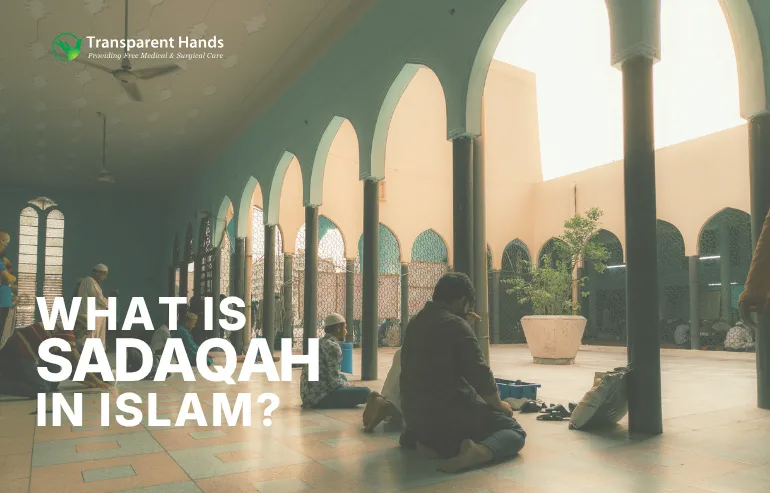
Sadaqah is a central Islamic concept that places charity at the center of Islamic ethos. Although Sadaqah is voluntary, it encompasses many behavioral values preached by Prophet Muhammad (ﷺ). Sadaqah is not only financial assistance but must be understood beyond that. The word Sadaqah comes from ṣ-d-q, which means ‘sincerity’. Therefore, Sadaqah, whether financial or behavioral, comes from the deepest and sincerest part of the human heart. Deeds like providing food, supporting healthcare initiatives, and building clean water sources are Sadaqah; giving sincere advice, visiting someone ill, and even smiling are Sadaqah. In this article, we will discuss these concepts in detail and learn how regular Sadaqah benefits society and individuals who practice it.
What Is Sadaqah?
Sadaqah in Islam is all about giving with sincerity. This can be through financial assistance or good deeds.
Simple Meaning of Sadaqah
Sadaqah in Islam is about ‘giving’ with complete sincerity. Therefore, Sadaqah cannot be limited to a few actions. It is a template that goes beyond monetary contributions to modify human behavior.
Meaning of Sadaqah in Arabic
As explained earlier, Sadaqah comes from the word ‘ṣ-d-q’. It is a trait that epitomizes sincerity. Since Sadaqah is voluntary giving, it is given in Allah’s (SWT) way with a sincere intention. While Islam stresses the need for worship, it also emphasizes building human relations to develop harmony among people.
Is Sadaqah Voluntary?
Unlike Zakat, Sadaqah is voluntary charity, and its true beauty and sincerity lie in the fact that Sadaqah is a choice, not an obligation. Believers may skip Sadaqah; however, Zakat is mandatory giving and must not be overlooked.
Is Sadaqah Only About Money?
The biggest misconception about Sadaqah is that it is entirely monetary. That’s perhaps because many people tend to equate Zakat and Sadaqah. While Zakat involves monetary giving (which can take different forms), Sadaqah includes both financial and behavioral aspects. This makes it accessible to all believers, regardless of financial standing. So, if someone doesn’t have the money to build a madrassa or a mosque, they can still reap fruits from the spiritual benefits of visiting an ill person, giving sound advice, smiling, and having a pleasant demeanor. The following hadith comprehensively defines the concept of Sadaqah: “The Messenger of Allah (ﷺ) said: “Every joint of a person must perform a charity each day that the sun rises: to judge justly between two people is a charity. To help a man with his mount, lifting him onto it or hoisting up his belongings onto it, is a charity. And the good word is a charity. And every step that you take towards the prayer is a charity, and removing a harmful object from the road is a charity.” [Al-Bukhari] [Muslim] Hadith 26, 40 Hadith an-Nawawi”
What Does the Quran Say About Sadaqah?
Sadaqah in Quran is a theme that is discussed several times. The Quran touches various aspects of human lives. The following Quranic verses clearly tell us about the spiritual benefits associated with Sadaqah: “The example of those who spend their wealth in the way of Allah is like a seed [of grain] which grows seven spikes; in each spike is a hundred grains. And Allah multiplies [His reward] for whom He wills. And Allah is all-Encompassing and Knowing.” (Surat Al-Baqarah, 2:261) Another Quranic verse tells us how Sadaqah is like a loan to Allah (SWT) that has the power to multiply over time: “Who is it that would loan Allah a goodly loan so He may multiply it for him many times over? And it is Allah who withholds and grants abundance, and to Him you will be returned. (Surat Al-Baqarah, 2:245)
What Does Hadith Say About Sadaqah?
Several Hadiths tell us about the spiritual benefits and rewards of giving Sadaqah. The following Hadith beautifully describes the benefits of giving Sadaqah and also tells believers how one should do it to preserve the dignity of the receiver: “Abu Huraira reported that the Messenger of Allah (ﷺ) had said: Seven are (the persons) whom Allah would give protection with His Shade on the Day when there would be no shade but that of Him (i. e. on the Day of Judgment, and they are): a just ruler, a youth who grew up with the worship of Allah; a person whose heart is attached to the mosques; two persons who love and meet each other and depart from each other for the sake of Allah; a man whom a beautiful woman of high rank seduces (for illicit relation), but he (rejects this offer by saying): ” I fear Allah” ; a person who gives charity and conceals it (to such an extent) that the right hand does not know what the left has given: and a person who remembered Allah in privacy and his eyes shed tears.” (Sahih Muslim, 1031a) Sadaqah in Hadiths gives a deeper and broader meaning, extending its scope to include acts of kindness and everyday expected conduct for believers. “Hudhaifa and Abu Shaiba reported Allah’s Messenger (ﷺ) as saying: Every act of goodness is sadaqa.” (Sahih Muslim, 1005) The following hadith further defines Sadaqah as everyday acts of kindness: “Abu Dharr narrated that the Messenger of Allah said: “Your smiling in the face of your brother is charity, commanding good and forbidding evil is charity, your giving directions to a man lost in the land is charity for you. Your seeing for a man with bad sight is a charity for you, your removal of a rock, a thorn or a bone from the road is charity for you. Your pouring what remains from your bucket into the bucket of your brother is charity for you.” (Jami` at-Tirmidhi, 1956)
What is the importance of Sadaqah?
To understand the importance of Sadaqah, one has to appreciate its scope. It not only promotes financial giving to improve the lives of the underprivileged but also goes further by developing altruistic behavior among believers. While Sadaqah promises various spiritual rewards, its true spirit is deeply rooted in practicing sincerity.
What Are the Types of Sadaqah?
Types of Sadaqah can be monetary or non-monetary. Monetary Sadaqah is a financial contribution made to assist deserving individuals facing challenging circumstances. In Islamic tradition, non-monetary acts can also qualify as Sadaqah. Actions like offering good counsel, sharing beneficial skills, helping with routine tasks, removing something dangerous from the path, and reconciling feuding parties are all acts of Sadaqah that promise many spiritual rewards.
Sadaqah Jariya
Sadaqah Jariya is a type of Sadaqah that promises continuous rewards. According to many Islamic scholars, after a person dies, their opportunity to perform new deeds generally comes to an end. Sadaqah Jariya enables believers to continue influencing the world positively even after their death. It also comes with great spiritual rewards that keep accumulating as long as the act remains alive and effective. The Prophet (ﷺ) said: “When a man dies, all his good deeds come to an end except three: Ongoing charity (Sadaqah Jariyah), beneficial knowledge, and a righteous son who prays for him.” (Sunan an-Nasa’I, 3651) Examples of Sadaqah Jariya: The following are the most common acts and examples of Sadaqah Jariya:
- Building mosques
- Building Madrassas and Schools
- Developing Clean Water Sources
- Planting Trees
- Donating Copies of the Quran
- Supporting Orphans
- Teaching Valuable Skills
Sadaqah Wajiba
It is important to clarify Sadaqah Wajiba because it is binding in nature. While the word ‘Sadaqah’ may have a voluntary connotation, ‘wajiba’ literally means obligatory. According to many Islamic scholars, Sadaqah Wajiba is a type of Sadaqah which is binding in nature. It includes Zakat, Sadaqah Fitr, Nadhr, Fidya, Kaffarah, and Udhiyyah. For detailed information, you can read our article about Sadaqah Wajiba.
Who Can Receive Sadaqah?
While Zakat can only be given to the eight defined categories of Muslims, voluntary Sadaqah has a broader scope. You can give to people of other faiths too. Moreover, it doesn’t involve any Nisab qualifications.
Can Sadaqah Be Used for Medical Treatment?
Yes, you can and should use your Sadaqah money to help underprivileged patients. The Quran tells us that saving a human life is like saving the entire humanity.Imagine doing that with the sincerity and spiritual power of Sadaqah. However, before committing to your Sadaqah donations, make sure the organization you choose is trustworthy. Although Shariah compliance may not be a strict requirement for Sadaqah, it is better to support Shariah-compliant organizations.
How to Give Sadaqah?
Islam promotes planning and proper organization. Like every other ritual or virtuous deed, Sadaqah should be given with an intention/Niyyah. Even if you are not able to complete the act, Allah (SWT) will give you the reward for the intention according to the following hadith: “The Prophet (ﷺ) narrating about his Lord I’m and said, “Allah ordered (the appointed angels over you) that the good and the bad deeds be written, and He then showed (the way) how (to write). If somebody intends to do a good deed and he does not do it, then Allah will write for him a full good deed (in his account with Him); and if he intends to do a good deed and actually did it, then Allah will write for him (in his account) with Him (its reward equal) from ten to seven hundred times to many more times: and if somebody intended to do a bad deed and he does not do it, then Allah will write a full good deed (in his account) with Him, and if he intended to do it (a bad deed) and actually did it, then Allah will write one bad deed (in his account)” (Sahih al-Bukhari, 6491)
Conclusion
Sadaqah is voluntary giving. It allows believers to practice generosity, compassion, and community support. It serves as a voluntary means for Muslims to seek spiritual rewards and redemption while contributing to the welfare of society. Whether through monetary contributions or simple acts of kindness, Sadaqah allows believers to practice the ideals prescribed by Islam. The answer to the “Sadaqah vs Zakat” debate is very simple: Zakat is obligatory giving, while Sadaqah is given with the sincerity of seeking no reward. Sadaqah also includes behavioral patterns. While both concepts relate to charitable giving, Sadaqah is purely voluntary. Giving Sadaqah to support healthcare initiatives is a great cause that leaves a lasting impact on the lives of patients struggling to regain their health.





Leave Your Comments