The 5 Pillars of Islam: Purpose and Importance
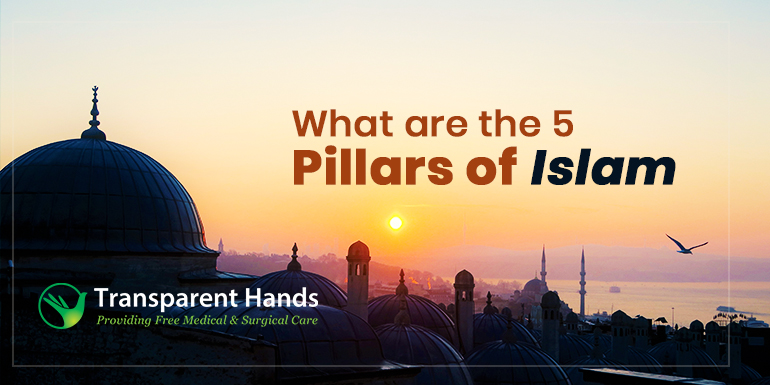
The 5 pillars of Islam outline a fundamental requirements for practicing Muslims. A Muslim’s faith is summed up into 5 simple rules called the pillars of Islam. They are, Shahāda, Salāh, Zakat, Fasting, an Hajj.
These 5 pillars of Islam provide Muslims with a framework, defining their moral and religious obligations. Thus, understanding these fundamentals is essential to practicing and appreciating Islam. In this blog, we will discuss the 5 pillars of islam, their purpose and importance.
The Purpose and Importance of 5 Pillars of Islam
The 5 Pillars of Islam
1. Shahāda
2. Salāh
3. Zakat
4. Fasting
5. Hajj
Lets get to know in details what are these 5 pillars of Islam.
1. Shahāda
Shahāda requires a person to know something well, declare and testify. Every Muslim must give Shahāda at the very first step that is the declaration of his faith in Islam. Shahāda means to accept that there is no god except Allah, and Hazrat Muhammed (S.A.W.W) is the last Prophet of Allah. A person who pronounces this phrase with conviction becomes a Muslim by heart.
Shahāda forms the core believe of muslins and thus it is the most important pillar of Islam. Those who give Shahāda from their hearts and have firm believe in it are promised the good reward in the afterlife.
2. Salāh (Prayer)
Salāh is regular prayer, 5 times a day. Muslims worship the Almighty Allah by offering their prayers. It is one of the most important in the 5 pillars of Islam. Prayer is not just a physical movement but a complete process that involves all three: the mind, the soul and the body. If anyone of these is missing, the goal of meditation will not be achieved. According to the Holy Quran, Salāh saves people from distress and fears and helps them refrain from all evils. Performing regular prayers does not only remind a Muslim of his belief but also strengthens his relationship with Allah. Therefore, Salalāh is compulsory for every adult Muslim and parent is supposed to urge their children to pray when they reach the age of seven.
The Quran tells us that establishing regular prayers can help us avoid immoral acts.
“Recite, [O Muhammad], what has been revealed to you of the Book and establish prayer. Indeed, prayer prohibits immorality and wrongdoing, and the remembrance of Allah is greater. And Allah knows that which you do.” (Surat Al-`Ankabūt, 29:45)
3. Zakat
Zakāh is derived from the Arabic word “Zakah” which means “purification”. Zakat can only be given to a defined group of people clearly mentioned in the Quran. It is the donation of a portion (2.5 %) of one’s wealth every year. It is a religious obligation to all individuals and institutions and a respectable way to help the needy.
Zakat proves that Islam is not just concerned about a person’s relation with Allah (S.W.T) but it also advises and guides them.
The Quran tells believers:
“And establish prayer and give zakah and bow with those who bow [in worship and obedience].” (Surat Al-Baqarah, 2:43)
4. Fasting (Sawm)
Muslims are obligated to fast during the month of Ramadān. Fasting is a way to gain self-control and discipline. A Muslim postpones the gratification of his daily needs and desires in compliance with the order of Allah Almighty. Fasting instills flexibility and adaptability of habits in a person by restricting him within the boundaries prescribed by the Almighty for the whole month of Ramadān. It develops empathy in a person to feel compassion for those who experience hunger daily.
The Quran tells us that: “O you who have believed, decreed upon you is fasting as it was decreed upon those before you that you may become righteous -” (2:183)
5. Hajj
Hajj is the fifth pillar of Islam. It is the world’s biggest annual religious gathering that stands out due to the immense magnitude of pilgrims. Hajj is obligatory to a person whose financial, physical, and familial conditions permit it. Hajj is a complete series of certain individual and collective actions at different times and places in Mecca and Madina in a pattern set by Hazrat Mohammad (S.A.W.W). Almost two million Muslims come to Mecca and Madina once a year to perform this religious duty and strengthen their belief and honor Hazrat Muhammed (S.A.W.W). They spend time performing Hajj, ignoring worldly luxuries and other distractions.
The Quran tells us that:
“In it are clear signs [such as] the standing place of Abraham. And whoever enters it shall be safe. And [due] to Allah from the people is a pilgrimage to the House – for whoever is able to find thereto a way. But whoever disbelieves – then indeed, Allah is free from need of the worlds.” (Surat ‘Āli `Imrān, 3:87)
The Importance of Hajj is Islam
Islam has been founded on these 5 pillars namely, Shahāda, Salah, Zakat, Fasting, and Hajj. Hazrat Muhammed (S.A.W.W) has provided his Ummah with this action-based program from Allah in order to strengthen our love with Allah. Now it is compulsory for all Muslims to uphold these basic norms and put them into practice.



Amazing…. Precise and well written!