Zakat vs Zakat al Fitr: what’s the difference?
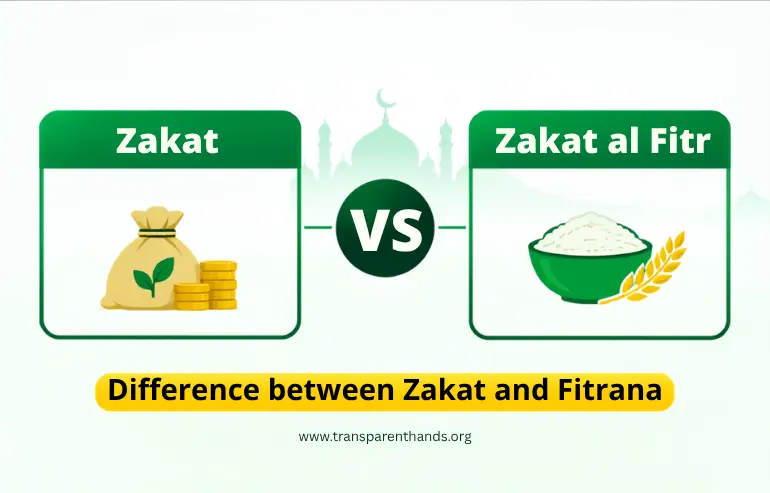
Zakat vs Zakat al Fitr: What’s the difference? Many believers are reluctant to ask this question, but they’re often curious. The confusion arises largely because the word ‘Zakat’ is used interchangeably with ‘Zakat al-Maal’, which is its subcategory. Note that many people might also be unfamiliar with the term ‘Zakat al-Fitr’, as it is locally called ‘Fitrana’. Therefore, Zakat has two types: Zakat al-Maal and Zakat al-Fitr (Fitrana). Both types of Zakat achieve purification. While Zakat al-Maal spiritually cleanses a believer’s wealth, Zakat al-Fitr purifies Ramadan fasting. Both types of Zakat are obligatory and must not be missed. In this blog, we will discuss the differences and similarities between these two types of Zakat.
Zakat vs Zakat al-Fitr: Key Differences
The following table will clearly show you the differences between Zakat and Fitrana:
| Zakat al-Maal | Zakat al-Fitr (Fitrana) | |
| Purpose | Purification of wealth | Purification of fasting during Ramadan. |
| Basis | Quran and Hadith | Quran and Hadith |
| Calculation | 2.5 % of Zakatable assets | Depends on the commodity of choice. |
| Nisab | 87.48 grams (7.5 tolas) for gold | 612.36 grams (52.5 tolas) for silver |
| Timing | Exactly one Islamic year (Hawl) | End of Ramadan |
| Payment | Cash, food, clothing, or another item of value | Cash, food, clothing, or another item of value |
| Recipients | Eight categories of people mentioned in the Quran. | Eight categories of people mentioned in the Quran. |
Zakat al-Maal and Zakat al-Fitr Calculation
Calculating Zakat al-Maal obligation is straightforward, especially if you use the following steps:
- Check if your total possessions are equal to or greater than the Nisab. The nisab threshold equals the current market price of 87.48 grams of gold or 612.36 grams of silver. If you have the equivalent wealth, you must pay Zakat.
- List your Zakatable assets and start adding up your total wealth.
- Subtract your liabilities from the amount.
- Calculate 2.5% of the remaining amount. That is your Zakat obligation.
- Pay your Zakat to eligible people or donate the amount to a trustworthy, Shariah-compliant charity.
When Should You Pay Zakat?
Both Zakat al-Maal and Zakat al-Fitr are time-bound obligations and must be fulfilled within particular deadlines. Remember, Zakat al-Maal is an annual obligation, and you must pay it on time. It is a recurring responsibility, and you must track it according to the lunar Islamic year (hawl). Similarly, you must pay Zakat al-Fitr before the start of the Eid al-Fitr prayer, according o the following Hadith:
“Narrated Ibn `Umar: The Prophet (ﷺ) ordered the people to pay Zakat-ul-Fitr before going to the `Id prayer.” (Sahih al-Bukhari 1509)
When Should You Pay Zakat al-Fitr?
You can pay your Fitrana before the start of the Eid al-Fitr prayers. However, make sure you don’t miss this important obligation. You can pay it during the last Ashra of Ramadan. This gives your Fitrana beneficiaries more time to prepare for Eid al-Fitr celebrations. Remember that the eligibility for Zakat al-Fitr and Zakat al-Maal are almost similar.
Common Misconceptions About Zakat and Zakat al-Fitr
Zakat and Sadaqah are the same: Remember that Zakat al-Maal and Zakat al-Fitr are obligations that you must pay. Sadaqah, on the other hand, is completely voluntary.
Zakat Must Be Paid During Ramadan: Many believers like to pay their Zakat al-Maal during Ramadan, which provides financial support to many needy believers. However, your Zakat obligation is tied to the hawl period, beginning on the date of your first Zakat payment. Don’t delay giving Zakat to wait for Ramadan. To support the underprivileged community during Ramadan, either adjust your Zakat-giving calendar by giving advance Zakat for the coming period, or give Sadaqah.
Zakat can be given to anyone who is poor: Remember that Zakat is reserved for Muslim believers, and it can only be given to the eight categories of people mentioned in the Quran. Moreover, it cannot be given to Hashimis, or the descendants of the Prophet (ﷺ). Also, you cannot give Zakat to your own ascendants or descendants.
Zakat Can Only be Given in Cash: Although giving Zakat in Cash may be most beneficial in some cases, it is permitted to give Zakat in the form of food, clothes, and other means. In case of ambiguity, consult a qualified Islamic scholor for an opinion.
Zakat al-Fitr is Only For the Adults: While Zakat al-Maal is an obligation on the adults, remember that Zakat al-Fitr must be paid for all members of the family, including children . Parents should pay Zakat al-Fitr for their children.
The Zakat Obligation is the Same Everywhere: Your Zakat obligation depends on where you live. The market prices of your place of residence will decide your Nisab (for Zakat al-Maal), and the food prices of the place will determine your Fitrana obligation.
Zakat vs Zakat al-Fitr: Which One Do You Need to Pay?
Muslims must pay both Zakat al-Maal and Zakat al-Fitr. They must meet both obligations on time and with complete sincerity. Your total wealth will determine your Zakat al-Maal. However, you can give Zakat al-Fitr according to your financial status. Be generous. Allah (SWT) loves those who spend in His way. The following Quranic verse instructs believers to be generous:
And spend in the way of Allah and do not throw [yourselves] with your [own] hands into destruction [by refraining]. And do good; indeed, Allah loves the doers of good. (Surat Al-Baqarah, 2:195)
Conclusion
Zakat al-Maal and Zakat al-Fitr are types of obligatory almsgiving in Islam. Both are types of Zakat that qualifying Muslims must pay within specific deadlines. Zakat al-Maal purifies a believer’s wealth, while Fitrana purifies their Ramadan worship. Although both types of Zakat may sound similar, there is a clear difference between Zakat and Fitrana.
The amount of Zakat al-Maal is significantly larger than Fitrana, but the latter must not be ignored, as it helps needy people take part in Eid al-Fitr celebrations. Both types of Zakat can only be given to the eight categories of people mentioned in the Quran. However, it is important to understand both types of Zakat, their subtle differences, and their similarities.





Leave Your Comments