How to Maximize Rewards During Eid ul Adha
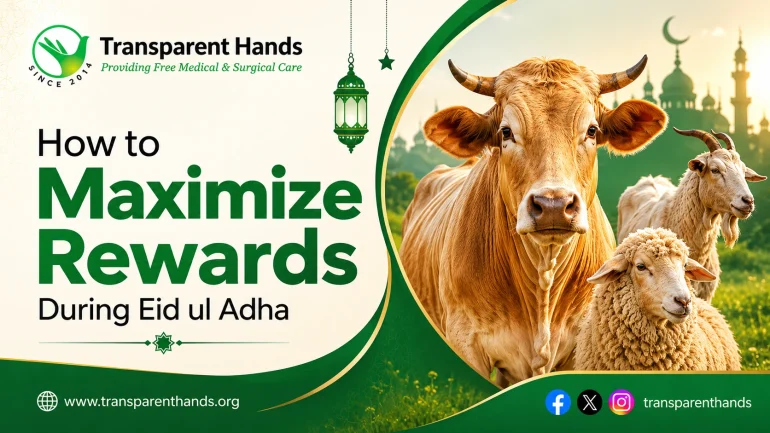
Dhul Hijjah is among the most sacred times of the year for Muslims. The Prophet (ﷺ) described the first ashra or ten days of Dhul Hijjah as the period in which righteous deeds are more beloved to Allah (SWT) than in any other comparable time. Understanding which acts carry the greatest weight during these days and how to approach them with the right intention should be a priority for every Muslim. This blog explains the highest-reward acts of Dhul Hijjah, how they relate to each other, and how Qurbani fits into a season of elevated worship.
Why Are The First Ten Days of Dhul Hijjah Significant?
The sanctity of this period can be recognized by the fact that the Quran takes an oath by these days, which scholars interpret as a sign of their extraordinary status:
“By the dawn, and by the ten nights.” (Surat Al-Fajr, 89:1–2)
The extraordinary status of Dhul Hijjah’s first ten days is also mentioned in the following hadith:
Narrated Ibn `Abbas: The Prophet (ﷺ) said, “No good deeds done on other days are superior to those done on these (first ten days of Dhul Hijja).” Then some companions of the Prophet (ﷺ) said, “Not even Jihad?” He replied, “Not even Jihad, except that of a man who does it by putting himself and his property in danger (for Allah’s sake) and does not return with any of those things.” (Sahih al-Bukhari 969).
It means that ordinary acts of worship performed during these ten days, prayer, fasting, dhikr, charity, and Qurbani, carry a weight that multiplies their spiritual value.
Fast on the Day of Arafah
The 9th of Dhul Hijjah, the Day of Arafah, is the most significant day of the Islamic calendar outside Ramadan. Fasting on this day for those not performing Hajj carries an extraordinary reward. According to a Hadith, it expiates the sins of the previous year and the coming year.
This single fast, performed on the day before Eid al-Adha, is thus one of the highest-value acts available to a Muslim who is not at Hajj. Therefore, if you are not performing Hajj, fast on this great day to maximize spiritual rewards.
Increase Dhikr, Particularly Takbeer
During the first ten days of Dhul Hijjah, the Prophet (ﷺ) recommended increasing Takbeer (Allahu Akbar), Tahleel (La ilaha illallah), and Tahmeed (Alhamdulillah).
اللّٰهُ أَكْبَرُ ، اللّٰهُ أَكْبَرُ ، لَا إِلٰهَ إِلَّا اللّٰهُ ، اللّٰهُ أَكْبَرُ ، اللّٰهُ أَكْبَرُ ، وَلِلّٰهِ الْحَمْدُ
Allāhu Akbar, Allāhu Akbar, Lā ilāha illallāh, Allāhu Akbar, Allāhu Akbar, wa lillāhil ḥamd
Translation: “Allah is the Greatest, Allah is the Greatest. There is no god but Allah. Allah is the Greatest, Allah is the Greatest, and to Allah belongs all praise.”
After every obligatory prayer from the 9th through the 13th of Dhul Hijjah, the Takbeer of Tashreeq is recited to praise Allah (SWT). These prayers can be performed continuously throughout the day to maximize spiritual benefits.
Give Qurbani With The Sincerest Intention
Qurbani on the 10th of Dhul Hijjah is described by the Prophet (ﷺ) as the most beloved act of worship on that specific day:
“The son of Adam does not do any deed on the Day of Sacrifice that is dearer to Allah than shedding blood. It will come on the Day of Resurrection with its horns and cloven hoofs and hair. Its blood is accepted by Allah before it reaches the ground. So be content when you do it.” (Sunan Ibn Majah, 3126)
Giving Qurbani with a sincere intention, choosing the best animal, and directing the meat to families in genuine need multiplies the act’s spiritual value through both the sacrifice itself and the charity it enables.
Increase Voluntary Prayers and Quran Recitation
These ten days are an opportunity to perform additional voluntary prayers, particularly Tahajjud, and to increase time with the Quran. Also, make sure that you say the Farz prayers in the mosque. Remember that on these auspicious days, every letter recited earns reward, and the elevation of these days amplifies that reward.
Give Charity with Generosity
The Quran connects generosity to the highest spiritual attainment:
“Never will you attain the good [reward] until you spend [in the way of Allah ] from that which you love. And whatever you spend – indeed, Allah is Knowing of it.” (Surat Ali Imran, 3:92)
Dhul Hijjah is an ideal time to give Sadaqah, pay Zakat if it’s due, and support causes that benefit the most vulnerable segments of society. Combining Qurbani with additional charitable acts during these days is one of the most beautiful ways to honor the season and express our gratitude towards Allah (SWT).
Share the Blessing of Eid & Donate Your Qurbani Through Transparent Hands
Transparent Hands is one of Pakistan’s most trusted online healthcare crowdfunding platforms, having connected thousands of underprivileged patients with the life-changing surgeries and medical care they desperately needed. We carry that same passion into our 100% Shariah-compliant Qurbani initiative, performed with sincere intentions, full transparency, and meticulous care. In previous years, our Qurbani meat has reached laborers earning daily wages, transgender individuals, orphaned children, families struggling in slum areas, madrassa students, widowed mothers, and senior citizens living in old-age homes. With your kindness this year, we can extend this sacred blessing to even more families. Offer your Qurbani (Fi Sabilillah) through Transparent Hands today and become a source of joy for those deserving of your Qurbani.
FAQs
Can I maximize Dhul Hijjah rewards even if I am not giving Qurbani?
Yes. Fasting on Arafah, increasing dhikr, praying voluntary prayers, reciting the Quran, and giving Sadaqah are all available to every Muslim during Dhul Hijjah, regardless of Qurbani eligibility.
Is fasting for all ten days of Dhul Hijjah recommended?
Fasting during the first nine days is a Sunnah. The 10th is Eid al-Adha, on which fasting is prohibited. Fasting specifically on the 9th (Arafah) carries the most significant reward.
Does giving Qurbani and fasting on Arafah in the same year double the reward?
Each act carries its own independent reward. Performing both Qurbani and fasting on Arafah in the same year combines multiple high-reward acts during the most elevated period of the Islamic calendar.
Is there a recommended amount of dhikr during Dhul Hijjah?
There is no fixed minimum. The principle is to increase dhikr beyond your normal routine during these days. Setting a personal goal, such as 100 repetitions each of Subhanallah, Alhamdulillah, and Allahu Akbar per day, is a practical way to approach this.
Should I perform Ghusl on the day of Eid ul Adha?
Yes. Performing Ghusl before the Eid prayer is a Sunnah. Wearing clean clothes and applying fragrance for the Eid prayer is also a confirmed Sunnah practice.



Leave Your Comments