Pediatric Cardiac Surgery Remains Inaccessible to the Needy
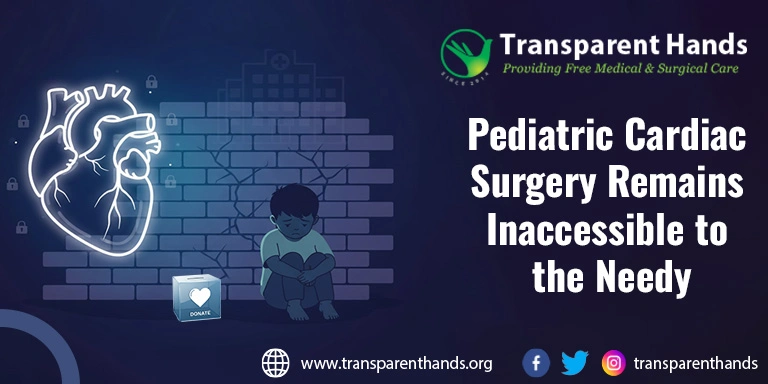
Children represent the most sensitive and vulnerable segment of any society. They require physical and emotional protection. Every society must ensure the well-being of children. Unfortunately, many Pakistani children remain vulnerable to a host of different diseases. Since half of Pakistan’s population lacks access to healthcare, a lot of children have suffered.
According to a study, each year, 60,000 Pakistani children are born with Congenital Heart Disease (CHD). Many children who require pediatric cardiac surgery do not receive it due to poverty and lack of access to adequate healthcare facilities.
In this article, we will discuss CHD, its symptoms, and how you can help in saving the lives of children affected by it.
Support A Pediatric Cardiac Surgery
What is CHD?
Congenital heart disease (CHD) occurs due to a defect in the structure of a child’s heart at the time of birth. While some CHD cases are simpler and don’t need serious interventions, many other cases might be more complex. Sometimes, multiple pediatric cardiac surgeries are required over a period of many years for complete recovery.
CHD might include the following issues:
- Problems with blood vessels: There may be too many or fewer blood vessels, resulting in a slower or awry blood flow.
- Issues related to heart valves that are responsible for defective blood flow.
- A hole in the walls of the heart chambers.
Sometimes these defects are immediately detectable shortly after birth. However, at other times, the diagnosis of CHD isn’t evident till the children reach their adolescence or adulthood.
Types of CHD
CHD is categorized into two larger groups: cyanotic heart diseases and acyanotic heart diseases.
Babies with cyanotic heart disease conditions suffer from low levels of oxygen and require pediatric cardiac surgery. Some of the examples of CHD are as follows:
Cyanotic congenital heart diseases
These heart anomalies reduce the amount of oxygen your heart can deliver to the rest of your body. Babies born with cyanotic congenital heart diseases usually have low levels of oxygen and need surgery.
Some examples include Tetralogy of Fallot (TOF), Transposition of the Great Arteries (TGA), Tricuspid Atresia, Hypoplastic Left Heart Syndrome (HLHS), and Total Anomalous Pulmonary Venous Connection (TAPVC).
These conditions can cause a blue tint (cyanosis) in the lips, skin, or fingernails that occur due to low oxygen levels circulating in the body.
Acyanotic congenital heart diseases
Acyanotic congenital heart diseases cause abnormal blood flow in the body, but generally maintain the required oxygen level. Acyanotic issues fall into two categories:
Shunt lesions (holes)
which occur due to abnormal openings in the heart through which blood flows between chambers or vessels. Some of the common examples include ventricular septal defect, atrial septal defect, or atrioventricular canal defect. These defects can cause blood to flow from the left side of the heart towards the right side.
Obstructive lesions
Obstructive lesions are characterized by the narrowing or blockage that restricts normal blood flow. Some of its examples are coarctation of the aorta (narrowing of the main artery), aortic stenosis (narrowing of the aortic opening), and pulmonary stenosis (narrowing of the pulmonary valve).
Note that both kinds of diseases can put extra burden on the heart and may require surgical interventions.
Symptoms:
Congenital heart defects usually occur right after birth or during the first few weeks or months of life. The symptoms of CHD are as follows:
- Cyanosis: Blue lips, tongue, or fingernails.
- Rapid or labored breathing.
- Shortness of breath while feeding or food intake.
- Fatigue or fainting during exercise or activity.
- Swollen hands, ankles, or feet.
- Weakness and tiredness.
- Failure to gain weight.
Note that the symptoms of the CHD can vary depending on the child’s age, severity, and type of congenital condition.
Causes of Congenital Heart Disease
CHD can happen due to a number of factors. It occurs during fetal development in the uterus. While we don’t yet completely understand why it happens, the causes may be related to some of the following factors:
- Abnormal chromosomes or gene-related issues.
- Excessive alcohol, smoking, or passive smoking during pregnancy.
- Diseases such as diabetes, rubella, or phenylketonuria during pregnancy.
- Taking medications or drugs for acne, high cholesterol, or high blood pressure.
What Can CHD Lead To?
CHD can lead to a number of different conditions:
Primary effects: pulmonary hypertension, endocarditis, and heart failure.
Secondary effects: blood clots, kidney-related issues, and liver diseases.
Treatment
Doctors may prescribe the following treatments:
Medications such as Diuretics (to control fluid buildup in the body), ACE inhibitors (to lower blood pressure), digoxin (to facilitate the heart’s pumping more efficiently), or Prostaglandins (to keep blood vessels open).
Oxygen Therapy for supplemental oxygen to maintain proper oxygen levels in the blood.
Endoscopic interventions for minimal invasive procedures using thin tubes inserted through blood vessels to repair certain defects without open-heart surgery.
Surgery for repairs to close holes, open narrowed vessels, or reconstruction of heart structures. In some cases, multiple surgeries may be required, carried out over several years. Almost 25% of children with CHD require surgical or endoscopic interventions within the first year of their life. With your support, many pediatric cardiac surgeries will be possible. Here is how you can save lives.
How Transparent Hands Saves Lives by Providing Pediatric Cardiac Surgery
Since 2014, Transparent Hands has been saving many young lives by supporting pediatric cardiac surgeries, such as:
- Open-Heart Surgery for Tetralogy of Fallot (TOF)
- Atrial Septal Defect (ASD) Closure
- Ventricular Septal Defect (VSD) Closure
- Mitral Valve Replacement (MVR)
- Patent Ductus Arteriosus (PDA) Ligation
- Repair of Coarctation of the Aorta
- Blalock-Taussig (BT) Shunt
- Double Outlet Right Ventricle (DORV) Repair
- Total Anomalous Pulmonary Venous Connection (TAPVC) Repair
- Fontan Procedure
- Senning Procedure for Transposition of the Great Arteries (TGA)
Your compassionate support can help save many more lives. Remember that many young lives depend on your support and kindness. Some of them might be in need of immediate pediatric cardiac surgery. As the clock ticks, their hope might start to diminish. Make your donations without delay. Donating to Transparent Hands is simple. Play your role in making a difference.




Leave Your Comments