Significance of Hajj in Islam
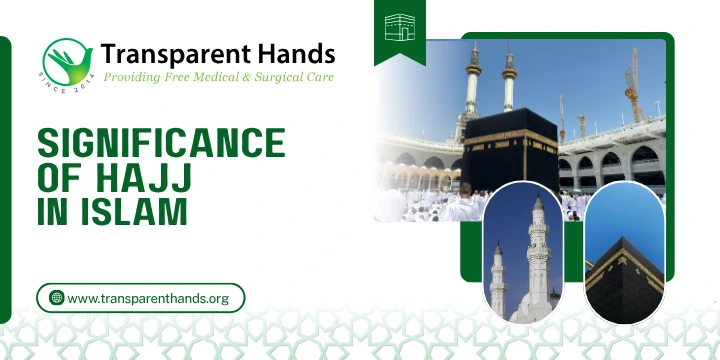
Hajj is the fifth pillar of Islam and one of the most important rituals that Muslims must perform at least once in their lives, provided they have the physical health and financial means. Hajj promises great spiritual benefits, and if performed with utmost sincerity of heart, it can be a source of redemption. Hajj attracts one of the biggest congregations in the world, allowing Muslims from diverse backgrounds to gather in Makkah each year during Dhul Hijjah to praise Allah (SWT) and pray for their individual and collective salvation.
Why is Hajj Considered Important in Islam
Performing Hajj is considered to be one of the most important duties and a great matter of privilege for Muslims, all around the world. It is the fifth pillar of Islam according to the following Hadith:
“Ibn ‘Umar (May Allah be pleased with them) reported: The Messenger of Allah (ﷺ) said, “(The superstructure of) Islam is based on five (pillars), testifying the fact that La ilaha illallah wa anna Muhammad-ar-Rasul-ullah [there is no true god except Allah, and Muhammad ((ﷺ)) is the Messenger of Allah], establishing As- Salat (the prayers), paying Zakat (poor due), the pilgrimage to the House [of Allah (Ka’bah)], and the Saum (fasting) during the month of Ramadan.” [Al-Bukhari and Muslim].” (Riyad as-Salihin, 1271)
Qualification for Hajj
The Quran also declares that Hajj is obligatory for those who can afford it. The following Qur’anic verses clearly describe the significance of Hajj for Muslims:
“In it are clear signs [such as] the standing place of Abraham. And whoever enters it shall be safe. And [due] to Allah from the people is a pilgrimage to the House – for whoever is able to find thereto a way. But whoever disbelieves – then indeed, Allah is free from need of the worlds.” (Surat ‘Āli `Imrān, 3:97)
The above-mentioned Quranic verse also determines the qualification of Hajj, which is mentioned in the following two Hadiths:
It was narrated that Ibn ‘Umar said: “A man stood up and said to the Prophet (ﷺ): ‘O Messenger of Allah! What makes Hajj obligatory?’ He said: ‘Provision and a mount.’ He said: ‘O Messenger of Allah, what is the (real) Hajj?’ He said: ‘The one with dishevelled hair and no perfume.’ Another (man) stood up and said: ‘O Messenger of Allah, what is the (real) Hajj?’ He said: ‘Raising one’s voice and slaughtering the sacrificial animal.’” (Sunan Ibn Majah, 2896)
The qualification of Hajj thus depends on the “Provision and a mount”, which is further explained in the following Hadith:
“It was narrated from Ibn ‘Abbas that the Messenger of Allah (ﷺ) said: “Provision and a mount,” meaning, about Allah’s saying: “Whoever can bear the way.” [3: 97]” (Sunan Ibn Majah, 2897)
Significance of Hajj
There are many deeds that a believer can perform to gain piety and closeness with Allah (SWT). However, Hajj is such a powerful ritual that it promises a complete redemption according to the following Hadith:
Narrated Abu Huraira: The Prophet (ﷺ) said, “Whoever performs Hajj for Allah’s pleasure and does not have sexual relations with his wife, and does not do evil or sins then he will return (after Hajj free from all sins) as if he were born anew.” (Sahih al-Bukhari, 1521)
Another Hadith clearly mentioned the great spiritual rewards associated with Hajj:
Narrated Abu Huraira: Allah’s Messenger (ﷺ) said, “(The performance of) `Umra is an expiation for the sins committed (between it and the previous one). And the reward of Hajj Mabrur (the one accepted by Allah) is nothing except Paradise.” (Sahih al-Bukhari, 1773)
Every ritual of Hajj brings believers closer to Allah (SWT) and offers particular meaning and spiritual experiences. It also allows pilgrims to experience the past and follow the footsteps of great prophets like Hazrat Ibrahim (AS), Hazrat Ismael (AS), and Hazrat Muhammad (ﷺ).
Some rituals of Hajj are, in fact, directly related to these Prophets. For example, the walk between Al-Safa and Al-Marwah during Hajj symbolizes Hazrat Hajira’s search for water, which she initiated for her son, Hazrat Ismail (AS). The incident led to the miracle of Zamzam, which sprang from the desert, under the feet of Hazrat Ismail (AS).
Hajj is also representative of the togetherness and unity among Muslims. Muslims from many different countries, races, and social backgrounds gather during Hajj to seek Allah’s approval. Nothing else matters during these days but the devotion of the believers. The Quran says:
“O mankind, indeed We have created you from male and female and made you peoples and tribes that you may know one another. Indeed, the most noble of you in the sight of Allah is the most righteous of you. Indeed, Allah is Knowing and Acquainted.” (Surat Al-Ĥujurāt, 49:13)
Like other great rituals recommended by Islam, Hajj demands spiritual introspection and can change lives.
Change Lives by Donating to Transparent Hands
Dhul Hijjah is the month of Hajj and Qurbani. That’s why it is one of the most sacred months in the Islamic calendar. The enormous importance of the month can be determined by the following hadith:
“Narrated Ibn `Abbas: The Prophet (ﷺ) said, “No good deeds done on other days are superior to those done on these (first ten days of Dhul Hijja).” Then some companions of the Prophet (ﷺ) said, “Not even Jihad?” He replied, “Not even Jihad, except that of a man who does it by putting himself and his property in danger (for Allah’s sake) and does not return with any of those things.”” (Sahih al-Bukhari, 969). Therefore, Dhul Hijjah is one of the best months to practice faith and to give Sadaqah.
If you want your Sadaqah to leave the greatest impact, make a donation to Transparent Hands. We are an online crowdfunding platform that has provided relief to thousands of patients since 2014. We have a very effective Maternal and Child program that has helped save many young lives, while we also support many surgical procedures. We also regularly organize medical camps in low-income areas of Pakistan, where expert doctors provide free medical checkups, medicines, and diagnostic tests, supported by professional paramedics.
Transparent Hands has an efficient and Shariah-compliant Qurbani program. Our team procures defect-free animals and conducts Qurbani on behalf of donors in the best available slaughterhouses. We prioritize Shariah rulings and make sure that sacrificial meat is best preserved till distributed. Last year, we gifted Qurbani meat among laborers, widows, orphans, seniors living in facilities, people with disabilities, madrassa students, transgender community, and families living in slums.
This Dhul Hijjah, you can leave a meaningful impact on someone’s life by giving Zakat, Sadaqah, or other donations to Transparent Hands. We can also conduct Qurbani on your behalf and make the Eid Day special for many deserving individuals and families. Donate Qurbani to Transparent Hands now!
FAQs
Is Hajj mandatory for all Muslims? Who must perform Hajj?
Muslims who are physically fit and have the financial means to perform Hajj must do so. According to a Hadith, Hajj is an important duty that should be performed as a priority.
Which rituals in Hajj commemorate the prophets, Hazrat Ibrahim (AS) and Hazrat Ismail (AS)?
Some rituals of Hajj honor Hazrat Ibrahim (AS) and Hazrat Ismail (AS). For example, Tawaf, Sa’i, Qurbani, and Rami al-Jamarat.
Why are the first ten days of Dhul Hijjah considered important in Islam?
According to Hadith, the first ten days of Dhul Hijjah are very sacred. Narrated by Ibn `Abbas (may Allah be pleased with him and his father): The Prophet ﷺ said, “No good deeds done on other days are superior to those done on these [first ten days of Dhul Hijjah].”
Then some companions of the Prophet ﷺ said, “Not even Jihad?”
He replied, “Not even Jihad, except that of a man who does it by putting himself and his property in danger [for Allah’s sake] and does not return with any of those things.”
Why do Muslims performing Hajj walk between Al-Safa and Al-Marwah?
The walk signifies Hazrat Hajira’s quest for water in the middle of a sprawling desert, whe she sought water for her your son, Hazrat Ismail (AS).
Can a sincere Hajj erase all previous sins of a Muslim?
Yes, according to this Hadith: “Whoever performs Hajj for the sake of Allah and does not engage in obscene speech or commit sins will return like the day his mother gave birth to him.”
(Sahih al-Bukhari, Sahih Muslim)
Can Hajj impact the spiritual life of a Muslim?
Hajj is a powerful experience that can change the course of any believer’s life and help them align their life with the demands of Shariah.



Leave Your Comments