Who is Eligible to Receive Zakat al-Fitr?
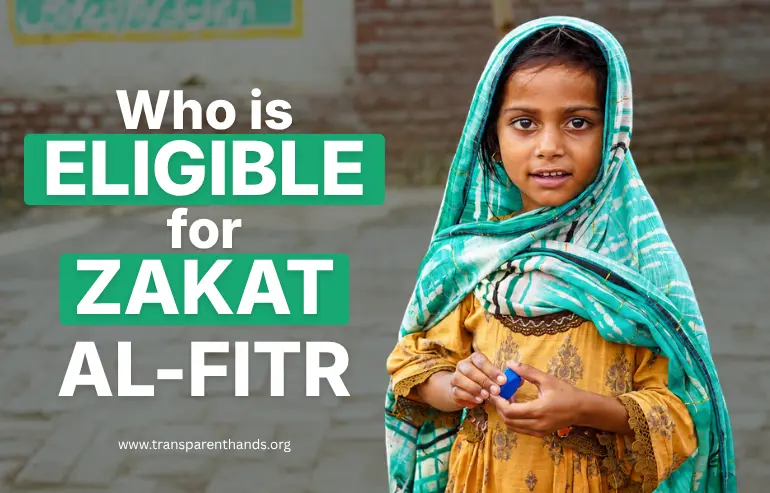
Ramadan is one of the most highly anticipated months for Muslims all around the world. During the entire month, Muslims fast and devote themselves to spiritual activities prescribed by Islam. It is a suitable time for all Muslims to reflect on their lives and to make adjustments to improve their relationship with Allah (SWT). Ramadan is also one of the most charitable months. Charity in Islam can be widely categorized into two types: Zakat, which is annual obligatory almsgiving, and Sadaqah, which is voluntary charity. Zakat has two types: Zakat al-Maal and Zakat al-Fitr. Generally, the concept of Zakat is related to purification. Zakat al-Maal spiritually purifies one’s wealth, while Zakat al-Fitr removes blemishes from our Ramadan fasting efforts. It is an obligatory giving that every eligible Muslim must pay on behalf of themselves and their family members before the Eid al-Fitr prayers. While it purifies our spiritual efforts, Zakat al-Fitr (also known as Fitrana) also helps the poor participate in the joys of Eid al-Fitr. In this article, we will try to understand the Zakat al-Fitr eligibility.
While Zakat al-Maal is calculated at a fixed rate of 2.5% of wealth above the Nisab threshold, the Fitrana amount is fixed and paid at the end of Ramadan.
Who Can Receive Zakat al-Fitr
While the purpose of Zakat al-Fitr is purification of the fast, it also ensures everyone can share the joys of Eid. The eight categories of people eligible for Fitrana are mentioned in the following verses:
“Zakah expenditures are only for the poor and for the needy and for those employed to collect [zakah] and for bringing hearts together [for Islam] and for freeing captives [or slaves] and for those in debt and for the cause of Allah and for the [stranded] traveler – an obligation [imposed] by Allah. And Allah is Knowing and Wise.” (Surat At-Tawbah, 9:60)
In practice, Fitrana is mostly reserved for the poor and the needy so they can share in the great Day of Eid al-Fitr. The Zakat al-Fitr recipients are clearly mentioned in these verses.
Can Zakat al-Fitr Be Used for Medical Treatment?
Medical treatment isn’t categorically mentioned in the eight categories that are eligible for Zakat. However, if someone falls under the categories of al-Fuqara or al-Masakin, they can receive Zakat al-Fitr for their medical treatment. Fitrana is usually given as staple food items such as wheat, barley, dates, rice, raisins, etc. You can also give the cash equivalents of the items to support people in need. Scholars recommend choosing the most valuable item depending on your affordability.
How to Choose Someone to Receive Your Zakat al-Fitr
Distributing Fitrana is an activity that requires utmost attention and care. It must not be taken casually. By following these steps, you can ensure that your Zakat al-Fitr goes to the most deserving people.
Step 1: Identify People Facing Financial Hardship
Find the most deserving people in your surroundings, especially among relatives and neighbors. Look for families who might not be able to afford a meal on the day of Eid al-Fitr. Remember that in many cases, the truly deserving among the poor may not be visible.
Step 2: Check Their Eligibility
Before handing over your Zakat al-Fitr, make sure that the person(s) you want to help are Islamically eligible. To be Zakat-eligible, the person should be Muslim and belong to one of the eight categories mentioned in the Quran. They also must not be your direct ascendant or descendants. According to the Hanafi jurisprudence, Zakat al-Fitr cannot be given to your ascendants (parents and grandparents) or descendants (children or grandchildren), or to your spouse. It also cannot be given to Hashimis (descendants of the Prophet (ﷺ), according to the following Hadith: “Zakat is forbidden for the Messenger of Allah (ﷺ) and his family, and they are Banu Hashim and Banu Al-Muttalib, and no one else.” (Sahih Muslim 1069c)
Step 3: Prioritize Those in Genuine Need
Allah (SWT) has given us the power to discern. Always try to help those with the most urgent need with your Zakat and Sadaqah. Start with your Zakat-eligible relatives and neighbors. People close to you have the strongest claim. You should also see the nature and degree of impact that your giving will leave on the lives of those you intend to help. Although Zakat al-Fitr in Islam is generally meant to increase Eid al-Fitr participation for everyone, you can fund it for life-saving and life-enabling initiatives such as providing healthcare to the needy.
Step 4: Give Before the Eid Prayer Deadline
Fitrana comes with a deadline. It must be given before the start of the Eid al-Fitr prayers according to the following hadith:
“The Prophet (ﷺ) ordered the people to pay Zakat-ul-Fitr before going to the `Id prayer.” (Sahih al-Bukhari, 1509)
Instead of waiting until the beginning of the Eid al-Fitr prayers, you can give your Fitrana during the last phase of Ramadan. The following hadith clearly mentions that:
“Yahya related to me that Malik had seen that the people of knowledge used to like to pay the zakat al-fitr after dawn had broken on the day of the Fitr before they went to the place of prayer.”
Malik said, “There is leeway in this, if Allah wills, in that it can be paid either before setting out (for the prayer) on the day of Fitr or afterwards.” (USC-MSA web (Book 17, Hadith 57))
You must always avoid delaying Zakat. Whether it is Zakat al-Maal, or Zakat al-Fitr, it must be given before the end of the deadline. So always plan ahead and make sure that this important responsibility is taken care of before the start of the Eid al-Fitr prayers. By giving your Fitrana in time, you ensure that your Ramadan fasting is cleansed of mistakes while giving an opportunity to deserving people to celebrate Eid. Make sure that you calculate the per-person Fitrana needed to validate your obligation. The following is a table that will help you choose a commodity and its equivalent Fitrana amount. These prices are for 2026 and are subject to change.
You can use the following table as a reference:
| Commodity | Quantity | Fitrana Amount
(Approximate local equivalents) |
| Wheat | Almost 2 kg | PKR 300 |
| Barley | Almost 4 kg | PKR 1100 |
| Dried Date (Chawara) | Almost 4 kg | PKR 3200 |
| Raisins | Almost 4 kg | PKR 6000 |
| Date (Ajwa) | Almost 4 kg | PKR 16000 |
Step 5: Use a Trusted Charity When Direct Distribution Is Difficult
If you don’t personally know any needy individuals, you can always donate Zakat to a trusted, Shariah-compliant charity. However, before committing your Fitrana, make sure that the organization is trustworthy and reaches the intended people before the Eid al-Fitr prayers. Organizations like Transparent Hands accept Zakat al-Fitr and make sure that the amount goes to the welfare of needy patients according to Islamic principles.
Conclusion
Zakat al-Fitr, or Fitrana, is almsgiving that purifies the spiritual efforts of believers during Ramadan. It also helps needy Muslims to become part of the Eid al-Fitr celebrations. The eligibility for receiving Fitrana is clearly defined in the Quran. The rules for Zakat al-Maal and Fitrana are the same, and the eligibility criteria for both are derived from Surat At-Tawbah, 9:60. Remember that Zakat al-Fitr must be given before the start of the Eid al-Fitr prayers. You can choose a commodity as Fitrana or opt to give an approximate local equivalent. Always show generosity while giving Fitrana. You can give your Fitrana to a needy person you know or trust a charity for this important responsibility. Make sure that it is given with complete sincerity and before the deadline. Helping needy patients with your Zakat giving is a great way of serving society and pleasing Allah (SWT).




Leave Your Comments