Why Do Muslims Practice Qurbani? A Spiritual & Historical Perspective
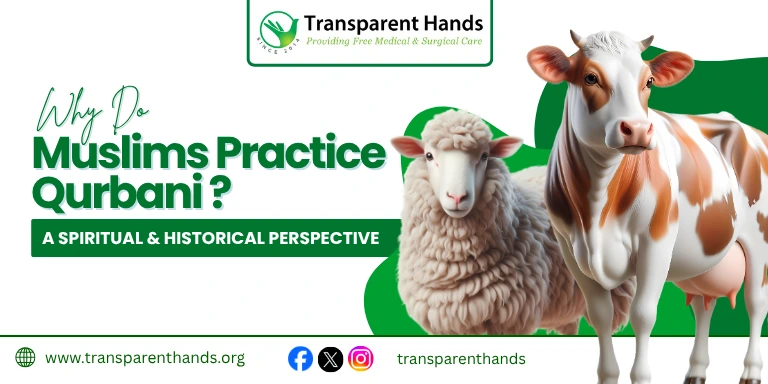
Qurbani is derived from the word “Qurb”, which means closeness. Each year, millions of Muslims offer animal sacrifice on the occasion of Eid al-Adha to fulfill an important religious obligation and to commemorate the great spirit of sacrifice and faith shown by Hazrat Ibraim (A.S) and His son, Hazrat Ismael (A.S) Qurbani is also a sunnah of Prophet Muhammad (ﷺ), and a practise that is encouraged by the Quran and the Sunnah.
In this article, we will examine the spiritual and historical significance of Qurbani in Islam.
Why Is Qurbani Widely Practiced?
Qurbani in Islam is considered an obligatory practise by the Hanafi school of thought, but other schools of Islamic jurisprudence also highly encourage it. The Quran asks believers to practice Qurbani:
“So pray to your Lord and sacrifice [to Him alone].” (Surat Al-Kawthar, 108:2)
The following Hadith further emphasizes the importance of conducting Qurbani:
“It was narrated from Abu Hurairah that the Messenger of Allah (ﷺ) said: “Whoever can afford it, but does not offer a sacrifice, let him not come near our prayer place.” (Sunan Ibn Majah, 3123)
Qurbani is considered obligatory on all adult Muslims who possess wealth equal to or greater than the Nisab. Therefore, people who qualify to give Zakat also qualify to give Qurbani.
The Nisab value for silver is 612.36 grams. Muslims who have money beyond their needs, or wealth equal to or greater than the Nisab, should perform Qurbani.
The spiritual significance of Qurbani in Islam is clearly mentioned in the following verse:
“Their meat will not reach Allah, nor will their blood, but what reaches Him is piety from you. Thus have We subjected them to you that you may glorify Allah for that [to] which He has guided you; and give good tidings to the doers of good.” (Surat Al-Ĥaj, 22:37)
The History of Qurbani Ritual
Qurbani, or Udhiyah, is an animal sacrifice ritual that commemorates the unwavering faith of Hazrat Ibrahim (A.S) and Hazrat Ismael (A.S). We learn about the story and history of Qurbani from the following Qurani verses:
“And when he reached with him [the age of] exertion, he said, “O my son, indeed I have seen in a dream that I [must] sacrifice you, so see what you think.” He said, “O my father, do as you are commanded. You will find me, if Allah wills, of the steadfast. And when they had both submitted and he put him down upon his forehead, We called to him, “O Abraham, You have fulfilled the vision.” Indeed, We thus reward the doers of good, Indeed, this was the clear trial. And We ransomed him with a great sacrifice, And We left for him [favorable mention] among later generations: “Peace upon Abraham.” Indeed, We thus reward the doers of good. Indeed, he was of Our believing servants.” (Surat Aş-Şāffāt, 37:102)
With Allah’s (SWT) will, a ram was substituted for Hazrat Imael (A.S), and both father and son passed their trial and proved their unwavering faith in Allah (SWT). Muslims commemorate this great event by offering animal sacrifices each year on the occasion of Eid al-Adha.
The Deeper Spiritual Meaning of Qurbani in Islam
Qurbani isn’t only about animal sacrifice. It has a much deeper meaning as it focuses on total submission. The ultimate goal of all believers is to totally submit to Allah’s (SWT) will. The Quran tells the believers:
“O you who have believed, enter into Islam completely [and perfectly] and do not follow the footsteps of Satan. Indeed, he is to you a clear enemy.” (Surat Al-Baqarah, 2:208)
Qurbani teaches us the importance of full submission to Allah’s (SWT) will and practicing Tawakkul. Tawakkul means completely trusting Allah (SWT) and having a complete faith in His kindness and wisdom. By giving Qurbani, believers symbolically sacrifice their desires and egos to fully submit to the will of Allah (SWT). The following Hadith clearly defined Tawakkul:
“‘Umar said: “I heard the Messenger of Allah (ﷺ) say: ‘If you were to rely upon Allah with the reliance He is due, you would be given provision like the birds: They go out hungry in the morning and come back with full bellies in the evening.”” (Sunan Ibn Majah, 4164)
Thus, Qurbani in Islam promises many spiritual benefits, and it is also an annual reminder of how believers should completely follow the Shariah to succeed in this world and the hereafter.
Donate Your Qurbani to Transparent Hands
It is customary to prepare three equal portions of Qurbani meat, one for self-consumption, another for neighbors and relatives, and the third for the needy. However, affluent believers who want to gain the maximum spiritual rewards should donate all three portions of sacrificial meat for distribution to the needy.
You can delegate your Qurbani responsibilities to a Shariah-compliant organization like Transparent Hands. We are an online crowdfunding platform working for the welfare of needy Pakistani patients since 2014. Since our inception, we have benefited thousands of deserving people. We have an extensive Maternal and Child program that has saved many lives. Moreover, we also support a wide range of surgeries for deserving patients. We also organize regular medical camps across Pakistan, focusing on low-income areas, where we provide free medical checkups, diagnostics, and medicines.
Transparent Hands has an efficient and Shariah-compliant Qurbani Program. We organize Qurbani in accordance with Shariah, at some of the best slaughterhouses available. Our team also ensures that Qurbani meat packages are gifted to individuals and families belonging to the most deserving in society. Last year, we gifted Qurbani meat packages among the orphans, widows, laborers, families living in slums and low-income areas, people with disabilities, transgender community, old people living in nursing homes, and madrassa students.
This time, we intend to reach more people than last year. With your support, we will be able to make this Eid special for many people who cannot afford a good event on Eid al-Adha.
Donate to Transparent Hands now!
FAQs
Why do Muslims practice Qurbani every year?
Qurbani is practiced every year by millions of muslims across the globe to commemorate the demonstration of unwavering faith from Hazrat Ibrahim (AS) and Hazrat Ismael (AS). It is also a sunnah of the Prophet Muhammad (ﷺ) and an obligation on all Muslims who can afford it.
What is the historical story behind the Qurbani ritual?
The History of Qurbani, as we know it, from the Quran is about the unwavering faith of Hazrat Ibrahim (AS), who was willing to sacrifice his own son Hazrat Ismael (AS), at the will of Allah (SWT). However, with the will of Allah (SWT), a ram was replaced and sacrificed instead.
What does Tawakkul mean and how is it connected to Qurbani?
Tawakkul is the quality of complete trust in Allah’s (SWT) will, mercy, and wisdom.
What is the Nisab value for Qurbani eligibility?
The Nisab value is equal to the prevalent rate of 612.36 grams of silver.
How does Qurbani represent submission to Allah (SWT)?
By offering Qurbani, a believer symbolically sacrifices his ego.
Do people who qualify for Zakat also qualify for Qurbani?
Yes, if they have wealth equal to or greater than the Nisab value on the date of Eid al-Adha.






Leave Your Comments