Can Zakat Be Given to Relatives?
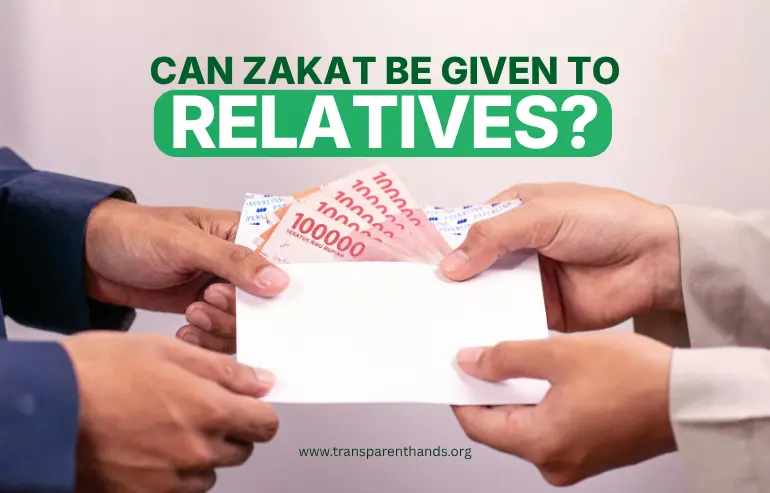
Charity begins at home. Islam encourages believers to help those close to them. However, while calculating your Zakat obligation, you may wonder if you are allowed to give your Zakat to a family member. It is natural to have a strong desire for the wellbeing of those near to us.
While we are allowed to give Zakat to relatives, there are some important considerations. According to the Hanafi point of view, some relatives like spouses, parents, grandparents, children, and grandchildren don’t qualify for it. The reason is that Zakat-giver cannot materially benefit from his own Zakat. In this blog, we will explain Zakat eligibility for relatives and explain the spirit of Zakat giving in Islam.
Can Zakat Be Given to Relatives?
The simplest answer to this question is yes. Zakat can be given to relatives if they qualify for it under Islamic law. Zakat qualification directly comes from the following Quranic verses:
Zakah expenditures are only for the poor and for the needy and for those employed to collect [zakah] and for bringing hearts together [for Islam] and for freeing captives [or slaves] and for those in debt and for the cause of Allah and for the [stranded] traveler – an obligation [imposed] by Allah . And Allah is Knowing and Wise. (Surat At-Tawbah, 9:60)
The verses clearly mentioned the category of people who can receive Zakat. Zakat must only be given to the categories of people mentioned in the Quran. Moreover, you cannot give your Zakat to your ascendants (parents and grandparents) and descendants (children and grandchildren). The rulings about supporting a spouse with Zakat may differ, depending on circumstances and the Islamic jurisprudence. According to the Hanafi jurisprudence, Zakat cannot be given to a spouse but spouses can support each other with Lillah and Sadaqah. However, for siblings, cousins, uncles, nieces, nephews, and other extended relationships, Zakat is permissible provided they are Zakat-eligible.
Why Giving Zakat to Eligible Relatives Can Be Significant
Helping Family Members in Financial Need
Undoubtedly, Islam appreciates providing help to relatives and neighbors. This helps create harmony in relationships and creates stronger bonds. In Islam, maintaining family ties (Silat-ur-Rahim) is a highly rewarded act. The following hadith beautifully captures the spirit of helping relatives first:
“Salman bin Amir Dabbi narrated that: the Messenger of Allah said: “Charity given to the poor is charity, and that given to a relative is two things: charity and upholding the ties of kinship.” (Sunan Ibn Majah, 1844)
Supporting Needy Relatives
While we have established that helping relatives with your Sadaqah and Zakat is permissible, one must ensure the recipients are Zakat-eligible. Remember that by giving Zakat responsibly, you contribute to a positive change in the lives of those who desperately require help.
Which Relatives May Receive Zakat?
Zakat recipients must independently qualify. The family relationship is irrelevant for eligibility purposes except where Islamic law imposes a financial duty on you.
Can Zakat Be Given to Siblings?
Since siblings are not the direct responsibility of the Zakat-giver, they can receive Zakat if they belong to one of the eight categories mentioned in the Quran. Therefore, an adult sibling who is poor, in debt, or not in a position may be eligible to receive Zakat. This also applies to half-siblings. So, Zakat to brothers and sisters is permissible. It is also permitted to give Zakat to nieces and nephews as long as they are Zakat-eligible according to the Quranic standards.
Can Zakat Be Given to an Uncle or Aunt?
Yes, paternal and maternal uncles and aunts can also receive Zakat if they meet the eligibility criteria mentioned in the Quran. They can be treated like any other Zakat-eligible recipient.
Can Zakat Be Given to Cousins?
Cousins and extended family members can also receive Zakat if they fall in one of the eight Zakat eligible categories mentioned in the Quran. So, if a cousin falls into one of the eight categories mentioned in the Quran, you can give Zakat to them without hesitation.
Can Zakat Be Given to Other Extended Family Members?
Yes, beyond direct relationships such as parents, children, grandparents, etc. Zakat can be given to relatives as long as they are not directly financially dependent and they fall within one of the eight categories of Zakat-eligible people mentioned in the Quran. Note that rulings may vary among Islamic scholars for certain cases. Therefore, always consult an Islamic scholar for greater clarity about the topic.
What Conditions Must a Relative Meet to Receive Zakat?
For a relative to receive Zakat, they must meet the same conditions as any other Zakat recipient:
They must be Muslim. Zakat is generally given to Muslims, or those belonging to the al-mu’allafatu qulubuhum category.
They must be Zakat-eligible. Zakat recipients must be poor, needy, in debt, a stranded traveler, or fall under another eligible category. This is the Quranic rule that defines Zakat eligibility and must never be overlooked.
They must not be your dependents. You cannot give Zakat to people who are directly your responsibility. So you cannot pay Zakat to your parents, children, and dependents.
They must not be a Hashimi. According to the Hanafi school of jurisprudence, Zakat cannot be given to the descendants of the Prophet’s (ﷺ) clan, Banu Hashim. The following Hadith clearly mentions that: “Zakat is forbidden for the Messenger of Allah (ﷺ) and his family, and they are Banu Hashim and Banu Al-Muttalib, and no one else (Sahih Muslim 1069c)
Intention (Niyyah) for Zakat. Intention is the essence of most Islamic rituals. You must clearly have the intention of giving Zakat before proceeding. According to a hadith: “Allah’s Messenger (ﷺ) said, “The reward of deeds depends upon the intentions and every person will get the reward according to what he has intended. So whoever emigrated for worldly benefits or for a woman to marry, his emigration was for what he emigrated for.” (Sahih al-Bukhari, 1)
Transfer of ownership. The recipient must be given full possession of the Zakat amount. The transfer of ownership is an important condition that must be met.
Can Zakat Be Given to a Relative for Medical Treatment?
Yes, besides immediate relationships (parents, children, etc.) Zakat can be given to a relative if they meet Zakat-eligibility criteria. Medical or surgical treatment itself isn’t a category mentioned in the Quran, however needy people who require surgery, medication, or medical treatment may fall under the broad categories of the needy (Masakin) or the poor (Fuqara). Providing assistance to such individuals is a great act of kindness. However, remember that under the Hanafi jurisprudence, Tamlik or the transfer of ownership is an important condition for the fulfillment of Zakat. Therefore, you must support Shariah-compliant organizations that satisfy this important condition of Tamlik.
Common Mistakes When Giving Zakat to Relatives
- Giving Zakat to dependents. Remember that you cannot give Zakat to people who you are financially responsible for. Therefore, giving Zakat to parents, children and dependents is not allowed.
- Assuming all poor relatives automatically qualify. The criteria mentioned in the Quran must always be the yardstick for eligibility. While a relative may be apparently poor, they must strictly fall within one of the Zakat categories mentioned in the Quran. Remember that someone who owns the Nisab value of wealth may not qualify.
- Counting a forgiven debt as Zakat. According to the Hanafi point of view, If a relative owes you money and you forgive the debt, it should be considered an act of Sadaqah rather than Zakat. For Zakat, tamlik (transfer of ownership) is a major condition.
- Complete Transfer of Ownership. The Zakat giver must ensure complete transfer of ownership so that the Zakat-taker can independently use the resources to fulfill their needs.
Conclusion
“Can you give Zakat to relatives?” is a question that many Muslims ask. Zakat can be given to relatives. In fact, doing so carries greater rewards according to a hadith. However, you must discern between eligible Zakat recipients and your dependents. You cannot give Zakat to your ascendants or descendants because you cannot materially benefit from your own Zakat giving. Giving Zakat to eligible siblings, uncles, aunts, cousins, and other extended family members is allowed. But if you are ever in doubt, consult a qualified Islamic scholar for an opinion. While Zakat eligibility depends on certain qualifications, you can always support your relatives with Sadaqah. You can also support needy patients needing surgical and medical treatment with your Zakat and Sadaqah money. Consider giving your Zakat donations to Transparent Hands to help needy patients restore their lives.





Leave Your Comments