How to Calculate Zakat in Malaysia
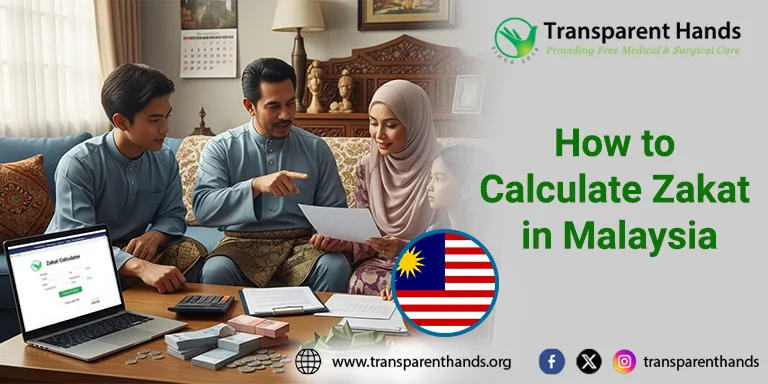
Zakat has a central importance in Islam. It is considered to be the third pillar of the religion. While the belief in the existence of Allah (SWT) forms the core of the faith, practices like Zakat provide a practical avenue for reaffirming one’s faith.
The purpose of giving Zakat is to show obedience towards Allah (SWT) while sharing our good fortune with believers who need our assistance. In this article, we will discuss the significance of Zakat in Islam and how to calculate Zakat in Malaysia. We will also suggest how you can support a noble cause with your Zakat obligations.
The Power of Zakat
Zakat is a powerful tool of philanthropy. It closely aligns with the United Nations’ Sustainable Development Goals. According to a 2015 study, the potential Zakat pool ranges between US$200 billion and US$1 trillion. If the Zakat amount is given regularly, it can uplift many communities and individuals.
However, more awareness about the impact of giving Zakat needs to be spread, especially in densely populated Muslim countries like Malaysia and Pakistan.
What is Zakat, and How Much Zakat Should be Paid?
The literal meaning of Zakat is to purify. The function of Zakat is to purify a believer’s wealth. While Islam mandates Halal and lawful means of earning, it tries to discourage the practice of hoarding wealth. Allah (SWT) admonishes those who refrain from spending their wealth in His name: The Quran tells us:
“O you who have believed, indeed many of the scholars and the monks devour the wealth of people unjustly and avert [them] from the way of Allah . And those who hoard gold and silver and spend it not in the way of Allah – give them tidings of a painful punishment.” (Surat At-Tawbah, 9:34)
What is Nisab?
Nisab is the value that forms the threshold for Zakat giving. Muslims who possess wealth equal to or greater than the Niab value must pay Zakat annually. According to the Shafi’i school of jurisprudence, the legal guardian must pay Zakat on behalf of children or mentally challenged individuals. Also note that the Islamic calendar is contingent on moon sightings.
In 2025, the estimated Nisab value is RM29,740.00. Muslims having wealth equivalent to or greater than that amount must pay Zakat.
Notably, many Muslim scholars set the value of Nisab according to the value of 87.48 grams of gold or 612.36 grams of silver.
How to Pay Zakat?
Paying Zakat is quite simple. First, you have to calculate your total wealth. Then you can subtract your liabilities from total wealth. Take 2.5% of the remaining amount, and if it equals or exceeds RM29,740.00, you are eligible to pay Zakat. However, Zakat does not apply to your personal items of use, such as your car and residential home.
According to the Shafi’i school of Islamic jurisprudence, Zakat is applicable to five main categories:
Monetary Assets such as currency, gold, and silver.
Trade goods including assets such as inventory, trading merchandise, real estate purchases with the intention of making a profit, and stocks.
Livestock, including camels, cattle, sheep, etc.
Crops and Fruits, including grains and legumes.
Mined Wealth and Treasure Trove
Who Should Be Eligible to Receive Zakat?
While giving Zakat is obligatory on believers who have wealth equal to or greater than the Nisab value, the eligibility for receiving Zakat is defined in the Quran.
The Quran tells us:
“Zakah expenditures are only for the poor and for the needy and for those employed to collect [zakah] and for bringing hearts together [for Islam] and for freeing captives [or slaves] and for those in debt and for the cause of Allah and for the [stranded] traveler – an obligation [imposed] by Allah. And Allah is Knowing and Wise.” (Surat At-Tawbah, 9:60)
Categories of People Eligible to Receive Zakat
So, according to the aforementioned verses, the following categories of people are eligible to receive Zakat:
Al-Fuqara: People with little or no income.
Al-Masakin: People with insufficient income to sustain fundamental living.
Al-‘Amilina ‘Alayha: Zakat collectors.
Al-Mu’allafati Qulubuhum: People inclined towards Islam.
Fir-Riqab : Prisoners or captives needing money as an exchange for their freedom.
Al-Gharimin: People in debt.
Fi Sabilillah: People striving to serve Islam.
Ibn As-Sabil: Travelers needing support.
Donate to Transparent Hands now!
Why Should You Support Transparent Hands with Your Zakat?
Health is one of the most cherishable aspects of human life. Recovering from injuries and diseases requires consistent financial and emotional support.
Unfortunately, we live in a very unequal world. According to the UN, half of the world’s population doesn’t have access to healthcare.
A similar situation prevails in Pakistan, where half of the population lacks access to healthcare. Consequently, the patients undergo unnecessary suffering.
Their medical condition further pushes them down the poverty cycle, especially if they are breadwinners for their families. The financial and emotional stress put on their families is unimaginable.
Transparent Hands is an online crowdfunding platform. Since 2014, Transparent Hands has assisted thousands of needy patients in Pakistan. We arrange medical and surgical relief for patients who cannot afford healthcare. All human beings should have access to healthcare. That is our prime motivation.
We organize medical camps in low-income areas to provide care for patients. Our medical camps offer free medical check-ups, diagnostics, and medicines. We also arrange free medical awareness sessions to educate our camp attendees.
Donating to Transparent Hands is simple. Just visit our highly interactive and informative website to make your contributions.
We are a Shariah-compliant organization. We work under the guidance of a Shari’ah expert. Therefore, you can donate your Zakat, Sadaqah, or other donations to us without hesitation.





Leave Your Comments