How to Pray Tahajjud: A Complete Islamic Guide
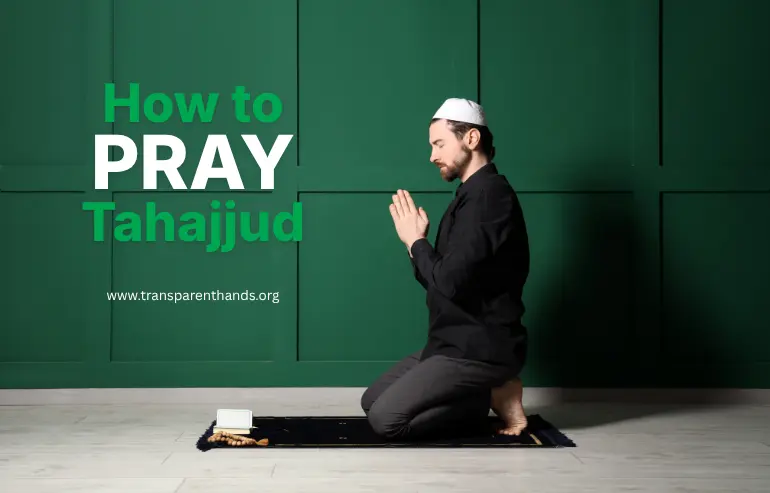
Tahajjud is a voluntary prayer that comes with great spiritual awakenings. It is a prayer that the Prophet Muhammad (ﷺ) regularly observed and encouraged believers to practice. Tahajjud has a transformative power because it is done with the sincerest of intentions. Sacrificing a comfortable night’s sleep for Tahajjud is physically uncomfortable, but it can bring significant spiritual change in a believer’s life. The last third of the night often offers a stillness and peace no other part of the day does. It is a perfect time to pray Tahajjud for reflection and spiritual connection. While the world sleeps, believers seek Allah (SWT) through their Tahajjud prayers. In this blog, we will explain the significance of Tahajjud, the best prayer time for it, and a step-by-step guide for believers how to pray Tahajjud.
What Is Tahajjud?
Tahajjud is a voluntary prayer performed at night. The word “Tahajjud” comes from the Arabic word “hajada”, which means “abandoning sleep”.The Quran directly commanded the Prophet Muhammad (ﷺ) to observe Tahajjud, which is mentioned in the following Quranic verses:
“And from [part of] the night, pray with it as additional [worship] for you; it is expected that your Lord will resurrect you to a praised station.”(Surat Al-‘Isrā’, 17:79)
Moreover, the Quran asks believers to:
“Arise [to pray] the night, except for a little –“ (Surat Al-Muzzammil, 73:2)
Although Tahajjud is voluntary, its importance is clear because it is directly mentioned in the Quran and is a Sunnah.
When to Pray Tahajjud?
Tahajjud time starts after Isha prayer and continues until Fajr. However, the best time is the last third of the night, according to the following Hadith:
“Narrated Abu Huraira: Allah’s Messenger (ﷺ) (p.b.u.h) said, “Our Lord, the Blessed, the Superior, comes every night down on the nearest Heaven to us when the last third of the night remains, saying: “Is there anyone to invoke Me, so that I may respond to invocation? Is there anyone to ask Me, so that I may grant him his request? Is there anyone seeking My forgiveness, so that I may forgive him?” (Sahih al-Bukhari, 1145)
According to some Islamic scholars, voluntary prayers can be offered right after the Isha prayers. In that case, it will be considered Qiyam-ul-Layl (night prayer). You can pray Tahajjud some time before the Fajr prayer. In fact, many Islamic scholars believe that the time between midnight and Fajr is the most suitable time for Tahajjud prayers. Allah (SWT) mentions believers who wake up at this time to pray and seek forgiveness in the following Quranic verses:
“They used to sleep but little of the night, And in the hours before dawn they would ask forgiveness.”(Surat Adh-Dhāriyāt, 51:17-18)
How Many Rakats Are in Tahajjud?
Tahajjud has no fixed or mandatory rakats. The prayers are flexible, but ideally, 8 Rakats should be offered because it is considered a Sunnah. You can either pray those 8 Rakats in 2 sets or 4 sets. It is also recommended to pray Witr after completing Tahajjud. The following hadith confirms these recommendations with the Sunnah:
“Abu Salama b. Abd al-Rahman asked ‘A’isha about the (night) prayer of the Messenger of Allah (ﷺ) during the month of Ramadan. She said: The Messenger of Allah (ﷺ) did not observe either in Ramadan or in other months more than eleven rak’ahs (of the night prayer). He (in the first instance) observed four rak’ahs. Ask not about their excellence and their length (i. e. these were matchless in perfection and length). He again observed four rak’ahs, and ask not about their excellence and their length. He would then observe three rak’ahs (of the Witr prayer). ‘A’isha again said: I said: Messenger of Allah, do you sleep before observing the Witr prayer? He said: O ‘A’isha, my eyes sleep but my heart does not sleep.” (Sahih Muslim, 738a)
No matter how many rakats you choose, try to stay consistent and steadfast in your practice. The following Hadith tells us to practice faith with discipline and with the sincerest of intentions:
“Narrated `Aisha: Allah’s Messenger (ﷺ) said, “Do good deeds properly, sincerely and moderately and know that your deeds will not make you enter Paradise, and that the most beloved deed to Allah is the most regular and constant even if it were little.” (Sahih al-Bukhari, 6464)
How to Pray Tahajjud Step by Step?
Here are some Tahajjud prayer steps that are according to the Sunnah:
Step 1
Niyyah: Intention, or Niyyah, is the key to sincerity. Make sure that you make proper intentions and say these words in your heart: “I intend to pray two/four rakats of Tahajjud for Allah (SWT).”
Step 2
Preparation is also central to Islamic rituals. Make sure you are fully awake and alert while saying your prayers. Wipe your face and perform ablution (Wudu) properly. Also encourage other family members to pray. The following Hadith promises great spiritual rewards for a couple that prays together during Tahajjud: The Prophet (ﷺ) said: “When a man himself wakes at night and wakens his wife and they pray two rak’ahs together, they are recorded among the men and women who make much mention of Allah.”(Sunan Abi Dawud, 1451)
Step 3
Find a quiet and clean place for reflection and prayers. Face towards Qiblah.
Step 4
Pray with complete sincerity and concentration.
Step 5
Make sure you say your Dua with complete sincerity and conviction.
What Dua Can You Make During Tahajjud?
Following is the Dua you can for Tahajjud. It is one of the most beautiful and comprehensive duas that the Prophet (ﷺ) recited during Tahajjud:
The Prophet’s (ﷺ) Tahajjud Dua (Salah-ul-Layl)
“Narrated Ibn `Abbas: When the Prophet (ﷺ) got up at night to offer the Tahajjud prayer, he used to say: Allahumma lakal-hamd. Anta qaiyyimus-samawati wal-ard wa man fihinna. Walakal-hamd, Laka mulkus-samawati wal-ard wa man fihinna. Walakal-hamd, anta nurus-samawati wal-ard. Wa lakal-hamd, anta-l-haq wa wa’duka-lhaq, wa liqa’uka Haq, wa qauluka Haq, wal-jannatu Han wan-naru Haq wannabiyuna Haq. Wa Muhammadun, sallal-lahu’alaihi wasallam, Haq, was-sa’atu Haq. Allahumma aslamtu Laka wabika amantu, wa ‘Alaika tawakkaltu, wa ilaika anabtu wa bika khasamtu, wa ilaika hakamtu faghfir li ma qaddamtu wama akh-khartu wama as-rartu wama’a lantu, anta-l-muqaddim wa anta-l-mu akh-khir, la ilaha illa anta (or la ilaha ghairuka). (O Allah! All the praises are for you, You are the Holder of the Heavens and the Earth, And whatever is in them. All the praises are for You; You have the possession of the Heavens and the Earth And whatever is in them. All the praises are for You; You are the Light of the Heavens and the Earth And all the praises are for You; You are the King of the Heavens and the Earth; And all the praises are for You; You are the Truth and Your Promise is the truth, And to meet You is true, Your Word is the truth And Paradise is true And Hell is true And all the Prophets (Peace be upon them) are true; And Muhammad is true, And the Day of Resurrection is true. O Allah ! I surrender (my will) to You; I believe in You and depend on You. And repent to You, And with Your help I argue (with my opponents, the non-believers) And I take You as a judge (to judge between us). Please forgive me my previous And future sins; And whatever I concealed or revealed And You are the One who make (some people) forward And (some) backward. There is none to be worshipped but you . Sufyan said that `Abdul Karim Abu Umaiya added to the above, ‘Wala haula Wala quwata illa billah’ (There is neither might nor power except with Allah).” (Sahih al-Bukhari, 1120)
اللَّهُمَّ لَكَ الْحَمْدُ أَنْتَ قَيِّمُ السَّمَوَاتِ وَالأَرْضِ وَمَنْ فِيهِنَّ، وَلَكَ الْحَمْدُ، لَكَ مُلْكُ السَّمَوَاتِ وَالأَرْضِ وَمَنْ فِيهِنَّ، وَلَكَ الْحَمْدُ أَنْتَ نُورُ السَّمَوَاتِ وَالأَرْضِ، وَلَكَ الْحَمْدُ أَنْتَ الْحَقُّ، وَوَعْدُكَ الْحَقُّ، وَلِقَاؤُكَ حَقٌّ، وَقَوْلُكَ حَقٌّ، وَالْجَنَّةُ حَقٌّ، وَالنَّارُ حَقٌّ، وَالنَّبِيُّونَ حَقٌّ، وَمُحَمَّدٌ صَلَّى اللَّهُ عَلَيْهِ وَسَلَّمَ حَقٌّ، وَالسَّاعَةُ حَقٌّ.
اللَّهُمَّ لَكَ أَسْلَمْتُ، وَبِكَ آمَنْتُ، وَعَلَيْكَ تَوَكَّلْتُ، وَإِلَيْكَ أَنَبْتُ، وَبِكَ خَاصَمْتُ، وَإِلَيْكَ حَاكَمْتُ، فَاغْفِرْ لِي مَا قَدَّمْتُ وَمَا أَخَّرْتُ، وَمَا أَسْرَرْتُ وَمَا أَعْلَنْتُ، أَنْتَ الْمُقَدِّمُ، وَأَنْتَ الْمُؤَخِّرُ، لَا إِلَهَ إِلَّا أَنْتَ (أَوْ: لَا إِلَهَ غَيْرُكَ).
You can also make other islamic duas in your Tahajjud prayer as well.
Benefits and Spiritual Importance of Tahajjud
Tahajjud provides many spiritual benefits, including mental discipline, emotional balance, and spiritual discipline. The following are some of the Tahajjud prayer benefits rooted in the Quran and Sunnah.
Developing a Stronger Connection With Allah
All Islamic rituals strengthen the spiritual bond with Allah (SWT). The same is true for Tahajjud. No one watches except Allah (SWT). There is no worldly intervention. No worldly thoughts. No audience. These settings allow great closeness with Allah (SWT). According to the following Quranic verses, Allah (SWT) likes those who make an effort to leave the comfort of their sleep to stand and pray:
“They arise from [their] beds; they supplicate their Lord in fear and aspiration, and from what We have provided them, they spend.” (Surat As-Sajdah, 32:16)
Seeking Forgiveness
The Quran clearly tells us that the pre-dawn time is a time for seeking forgiveness from Allah (SWT). The Quran mentions it as a time for forgiveness:
“And in the hours before dawn they would ask forgiveness” (Surah Adh-Dhariyat, 51:18).
Strengthening a Consistent Prayer Routine
Tahajjud is voluntary, and it doesn’t replace your daily prayer obligations. But it complements them. Praying Tahajjud can positively affect a believer’s attitude toward saying routine prayers with complete sincerity. The spiritual momentum and energy gained from Tahajjud carry into Fajr and other prayers.
How to Wake Up for Tahajjud Consistently
Waking up for Tahajjud consistently is difficult. The following are some of the strategies that can help you build this habit:
- Set an alarm for a specific time well before the Fajr prayer, so you can comfortably say your Tahajjud prayers. You can pray Tahajjud before Fajr.
- Make a sincere intention before sleeping. Allah (SWT) will bless your intention and reward you spiritually.
- Manage your goals gradually. Start with 2 Rakats of Tahajjud and gradually move to 8 rakats as you get more comfortable.
Common Mistakes Beginners Make When Praying Tahajjud
- Sometimes, believers start Tahajjud with great enthusiasm but find it unsustainable over time. Avoid these mistakes to strengthen your Tahajjud practice:
- Sleep before Tahajjud, instead of keeping yourself up all night. Remember that the essence of Tahajjud is waking up after sleeping. Sitting awake until midnight for prayer is Qiyam-ul-Layl.
- Making Dua without understanding its meaning. You are required to say your prayers in Arabic, but knowing the meaning of what you say is also important.
- Witr is the final prayer of the night and must be completed before Fajr. If you wake up close to Fajr, pray your Witr first, and if the time is short, you may skip Tahajjud in favor of Witr.
Tahajjud vs Fajr: What Is the Difference?
Remember that Fajr is an obligatory prayer. Although Tahajjud and Fajr are prayed close to dawn, there is a clear difference between the two prayers:
| Tahajjud | Fajr | |
| Type | Voluntary/optional night prayer | Obligatory daily prayer and cannot be missed |
| Time | After Isha and before Fajr | Begins at dawn |
| Rakats | Flexible number of rakats | Two obligatory rakats and two voluntary rakats. |
| Additional prayer | Can include additional voluntary prayer | One of the five daily prayers |
| Status | (Sunnah/Mustahab) | Fard (obligatory) |
Conclusion
In this article, we discussed the Tahajjud prayer method and its significance. Tahajjud is a beautiful prayer that is simple but leaves a profound impact on a believer’s life. It is a great way to draw closer to Allah (SWT), as mentioned in the Quran and the Sunnah. Tahajjud is one of the Prophet’s (ﷺ) Sunnah that Muslims must adopt because it comes with many spiritual advantages. The Sunnah practice, according to a Hadith, is 11 Rakats: 8 of Tahajjud followed by 3 of Witr. However, if you are a beginner, you can start out with 2 Rakats and gradually increase with time. If developing a strong bond with Allah (SWT) is your priority, start observing Tahajjud consistently.



Leave Your Comments